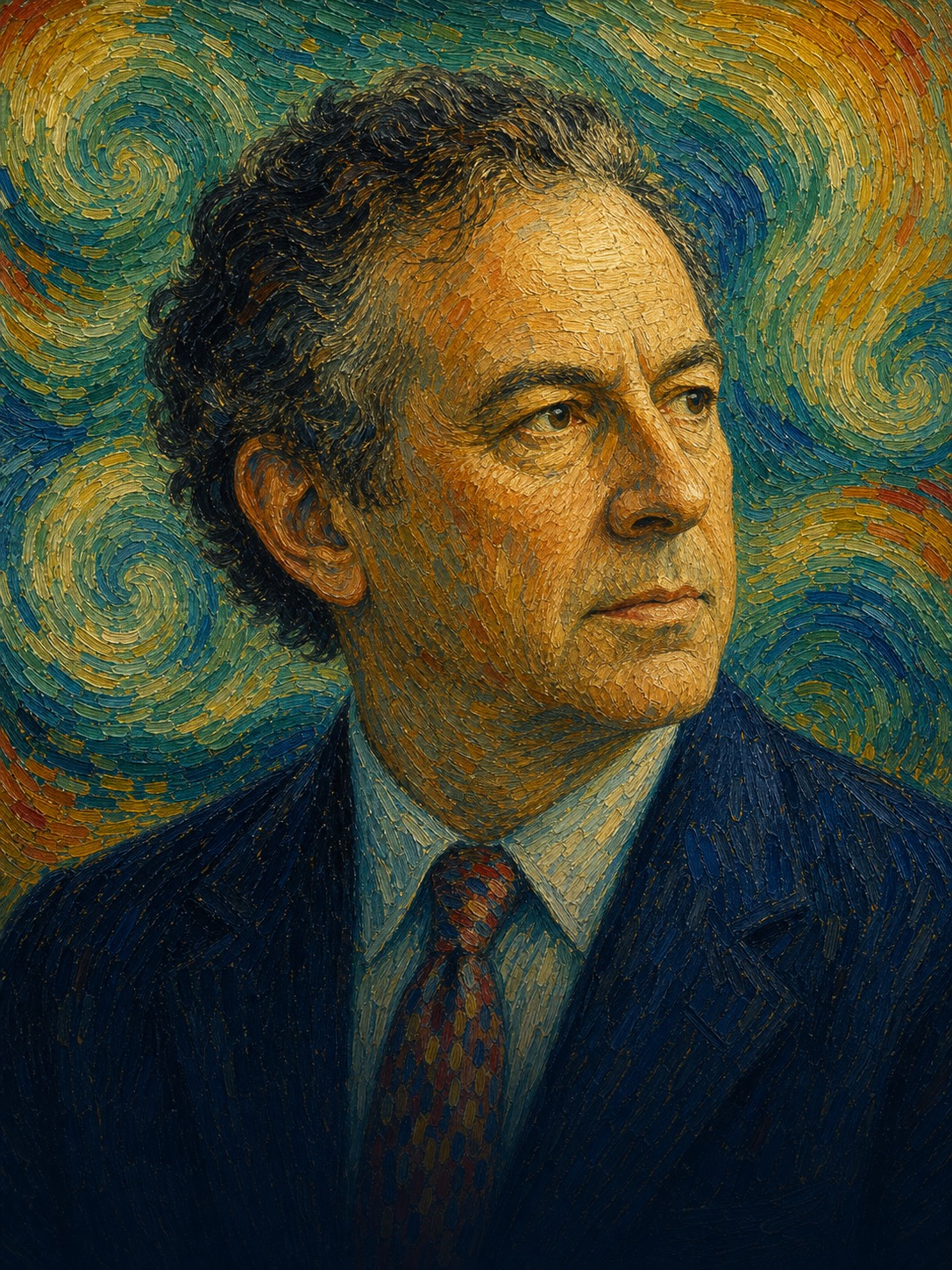
Victor Niederhoffer
The current folder documents a source-access gap and strict replacement standard; no track record, process, trade, loss, legal record, or investable edge is established.
As of 2026-07-31T01:20:58Z (UTC). This deliberately incomplete profile records the evidence boundary of T0786 rather than converting widely repeated investing narratives into uncited fact.
Research-status notice
Victor Niederhoffer is the subject named in the Canon's T0786 queue entry (Investing Canon TODO, 2026). The editorial roster classifies him as [CAUTIONARY] and supplies the shorthand "brilliance, leverage, two blow-ups" (Investor List, 2026). That shorthand is a research lead, not evidence of biography, vehicle, date, leverage, strategy, or loss mechanics.
The profile standard requires a verified snapshot, career chronology, vehicle analysis, return record, peak-assets estimate, and annotated source map (Research Spec, 2026). Before searching, this run framed eight questions: (1) what records establish identity, life status, nationality, and education; (2) which employers, firms, partnerships, funds, or accounts establish a dated career chronology; (3) which documents establish investment discretion rather than a promotional or colleague association; (4) what audited or filing-supported return series exists; (5) what record supports any peak-assets estimate; (6) what primary material establishes his stated methods; (7) what contemporaneous reporting explains the alleged loss episodes; and (8) what regulator, court, or credible criticism evidence qualifies the record.
The research plan classified this as a post-internet but partly opaque, hedge-fund/speculator profile with a mandatory cautionary-tale playbook. It therefore prioritized regulator and court routes, adviser and filing records, contemporaneous financial press, original books and interviews, archival material, and adverse reporting before any retrospective profile. The full 32-query discovery battery ran in eight independent four-query batches across biography, fund structure, filings, track record, AUM, interviews, writings, losses, criticism, litigation, regulation, books, archives, and current status. Every batch returned HTTP 401 Unauthorized before returning a result, snippet, URL, or page body. Direct attempts at candidate regulator, court, archive, publisher, firm, and press routes failed at the configured network proxy with HTTP 403 before origin text arrived.
Five independent read-only research lanes separately tested career and identity, track record and vehicles, criticism and regulatory history, source-map recovery, and final QA. Their results agreed with the access failure. A blocked request is not evidence that a candidate page exists, is current, or supports the proposition suggested by a URL. Consequently, this document does not assert a birth date, nationality, education, employer, fund, return, AUM figure, loss event, legal history, or current living status. The runbook allows a best-effort, gap-explicit record when the source base is inaccessible (Hourly Runbook, 2026); it does not allow memory or repetition to fill the gap.
Snapshot
| Field | Evidence status as of 2026-07-31T01:20:58Z |
|---|---|
| Name | "Victor Niederhoffer" is the Canon task label; full legal identity was not independently established from readable external source text in this run. |
| Born / died | Not established from an accessible source. |
| Nationality | Not established from an accessible source. |
| Living / deceased status | Not independently verified as of the stated timestamp. A current official, institutional, or reliable news record is required. |
| Education / training | Not established from readable source text. |
| Vehicles | Not established from readable source text. No firm, fund, partnership, account, or advisory vehicle is attributed here. |
| Years active | Not established from readable source text. |
| Asset classes | Not established from readable source text. |
| Style tags | Not assigned. The roster's cautionary tag is editorial context, not a documented investment-style classification. |
| Verified track record and period | No audited or official return series, fund report, prospectus, regulatory filing, or independent performance account was accessible. |
| Peak AUM | Not established from readable source text. |
| Legal / regulatory developments | No conclusion is warranted. Relevant databases could not be searched or read; this is neither a clean-record finding nor an adverse finding. |
The deliberately sparse table is not an assertion that the underlying facts are unknowable. It records the narrower and auditable fact that this run could not inspect primary or credible secondary source text. A later profile must distinguish the person from similarly named individuals, the decision-maker from a firm or collaborator, a fund from a managed account, and a reported result from an audited vehicle-level return.
Life & career timeline
No dated career event is admitted in this profile because no external source page was readable. A future reconstruction should establish the timeline in the following order:
- A reliable official, institutional, biographical, or contemporaneous news record should establish identity, life dates, nationality, and current status.
- Dated education, employment, exchange-membership, partnership, adviser, or firm documents should establish training, roles, locations, and tenure.
- Formation records, Form ADV disclosures, fund documents, partnership agreements, prospectuses, annual reports, and archived firm materials should identify each legal vehicle and the scope of investment authority.
- Original books, dated interviews, speeches, correspondence, or contemporaneous reporting should establish the investor's own method and narrative of career changes.
- Independently sourced press, regulatory, court, and post-mortem materials should test, rather than merely repeat, purported career milestones and loss episodes.
The order matters. A financial biography can easily merge a person's title with a firm's history, attribute a team result to an individual, or treat a later recollection as a contemporaneous fact. It is especially important for an investor selected by the Canon as cautionary context: a conventional success chronology may omit liquidity terms, leverage, option exposures, redemptions, counterparties, or the distinction between manager capital and client capital. Until sources identify both the person and the vehicle, every such date or role remains outside this evidence base or is [unverified].
Vehicles & structure
The profile template requires separation among personal capital, partnerships, pooled funds, separately managed accounts, registered-adviser capital, exchange or broker roles, research businesses, and media or publishing activities (Research Spec, 2026). No accessible source established which, if any, vehicle Niederhoffer founded, owned, controlled, advised, traded for, or merely appeared alongside.
A later source-based version must answer the following before assigning a vehicle or return:
- What is the exact legal name of each entity, and which record confirms formation, registration, mandate, jurisdiction, and dates?
- Was capital personal, pooled, separately managed, partnership, fund, or held inside another institution?
- Who had investment discretion, and was it sole, shared, delegated, or limited to a particular sleeve or period?
- What fees, liquidity terms, leverage limits, concentration limits, margin practices, counterparties, redemption rights, and reporting conventions applied?
- Which results belong to an individual, a team, an entity, a successor, or an investor share class?
- For each purported loss, was the relevant measure NAV, investor capital, manager capital, gross exposure, realised P&L, drawdown, liquidation, or asset outflow?
These are substantive controls, not paperwork. A holdings disclosure need not reveal cost, entry date, client ownership, financing, or the manager who made the decision. A public account of a fund failure may describe a closure without identifying the legal vehicle, return series, or investor experience. In a cautionary analysis, these distinctions prevent one memorable event from being used as an imprecise substitute for risk measurement.
Track record detail with caveats
No verified track record is available as of the stated timestamp. This run did not obtain any of the following:
- an audited, official, or independently inspected return series;
- a dated fund report, prospectus, partnership letter, or performance table;
- a benchmark, gross/net convention, fee treatment, cash-flow treatment, or survivorship treatment;
- a source-supported peak-assets figure with entity, date, and calculation basis;
- position-level evidence separating selection, sizing, financing, timing, liquidity, and market effects; or
- a primary record that allocates performance and losses among an individual, a team, a firm, and any successor organization.
No CAGR, annual return, P&L, loss percentage, asset figure, claimed "blow-up," market-beating assertion, or ranking belongs in a later version without two independent sources or a clear [single-source], [self-reported], or [disputed] label. Each numerical assertion should identify the named vehicle, exact period, currency, gross or net calculation, benchmark, fee treatment, leverage convention, and relevant investor class. The arithmetic should be tested against the start value, end value, timing of subscriptions and redemptions, and any stated drawdown.
For alleged crisis episodes, future research must not conflate a manager's personal trading loss, a fund's net-asset-value loss, a temporary drawdown, forced liquidations, investor redemptions, and a legal entity's closure. Nor should it infer tail-risk mechanics from general knowledge of options, trend-following, or hedge-fund leverage. A credible case needs contemporaneous source text describing the position, financing, liquidity, path, decision authority, and outcome. The absence of that text here says nothing about whether the event occurred; it says that this run cannot describe it responsibly.
Why they matter
The Canon selected Niederhoffer and marked the selection with cautionary editorial context (Investor List, 2026). That is enough to justify an unusually rigorous study of the relationship between apparent skill, position construction, exposure measurement, liquidity, leverage, tail risk, disclosure, and survival. It is not enough to establish any individual conclusion about him.
The eventual analytical value lies in separating four questions that are often collapsed into a single story: whether a documented return series exists; what process generated it; what institutional and contractual structure made it possible; and how an independently documented adverse episode qualified the result. A robust profile may find that some parts of the record are richly documented and others are not. It should preserve those asymmetries rather than use fame, colourful retellings, or an editorial selection label as proof.
No regulatory, litigation, or criticism finding is made here. The mandatory adversarial search failed before it produced results, so it establishes neither a clean record nor a negative one. Likewise, the profile does not credit a publication, firm, colleague, strategy, or later commentary to Niederhoffer without an accessible source explicitly making that connection.
Source-access record
The source-recovery protocol was executed as far as this environment allowed. The configured research browser rejected all 32 structured queries with HTTP 401 before results. Direct external requests were stopped by a proxy with HTTP 403 before origin content could be read. The recovery routes in sources.md are retained so a later authenticated run can start with authoritative targets rather than repeat the discovery framing.
Those routes are not citations. They support no claim in this profile, including any proposition suggested by their URL paths, search terms, titles, or archival context. The usable external-source count for T0786 is zero. This access result is a limitation of the run, not evidence of a thin historical record.
Open questions for later tasks
- Which readable record establishes the person's full identity, life dates, nationality, education, and living/deceased status as of the access date?
- What source-supported chronological record distinguishes roles in academia, exchanges, brokerage, investment management, publishing, and other activities?
- Which legal entities, funds, partnerships, advisers, managed accounts, or firms did he actually control or advise, and during what dates?
- What evidence identifies individual decision authority versus colleague, firm, or successor authority?
- What return records exist by vehicle and period, and are they audited, net of fees, independently corroborated, or self-reported?
- What peak-AUM figures exist, and what entity, date, methodology, and investor capital do they measure?
- What primary materials establish a dated account of research, valuation, entry, sizing, portfolio construction, risk management, and selling?
- What contemporaneous materials document any major loss, closure, drawdown, or risk event with precise economic and legal attribution?
- What regulator, court, or reporting records establish an adverse development, allegation, outcome, or absence of a match only after an actual searchable query?
- Which documented practices are transferable to an individual investor without the original mandate, information network, market access, financing, or institutional infrastructure?
Continuation protocol
The next researcher should begin with the ordered recovery routes in sources.md. Promote a route into the evidence base only after opening and reading it. Start with identity and entity mapping; then locate first-party materials and vehicle-level performance records; then test each important number with an independent source; then reconstruct adverse episodes from contemporaneous, regulatory, or court material. A regulator search with no readable results must not be reported as a clean record. A search snippet, page title, URL, remembered quotation, uncited biography, holdings snapshot, or generic option-risk explanation must not become a fact.
Before replacing this preliminary record, re-open at least three final citations, verify every key number against a second independent source or flag it, and check current legal and life-status claims at the time of writing. No later Canon task should treat this profile as evidence of Niederhoffer's biography, performance, strategy, controversy, or legal record. Its reliable contribution is narrower: it defines the unanswered questions, the person/entity/vehicle attribution standard, and the documented access boundary that prevented a conventional profile in this run.
Research status as of 2026-07-31T01:44:14Z (UTC). This is not a reconstruction of Victor Niederhoffer's investing philosophy. It records the evidence boundary encountered after T0786 and during T0787, so later research can replace uncertainty with opened, attributable source material rather than memory or repeated market folklore.
Evidence status and research frame
The Canon's profile task for Victor Niederhoffer concluded immediately before this task. It recorded no usable external source page, no independently verified identity or vehicle record, and no verified performance, strategy, risk, loss, legal, or regulatory fact (T0786 profile). Its source map retained recovery routes but explicitly classified them as leads rather than evidence because the pages could not be read (T0786 source map). This task began from that narrower evidence base rather than treating the task label, search terms, publication titles, or commonly repeated narratives as proof.
The guiding questions for a philosophy study were: (1) what did Niederhoffer himself say markets systematically misprice; (2) what is the source-backed chain from idea to entry, sizing, and exit; (3) what instruments, holding periods, and portfolio-construction rules did he disclose; (4) what risk limits, liquidity assumptions, financing constraints, or stop rules did he state; (5) how did his method change across documented vehicles and market episodes; (6) what did he explicitly reject; and (7) what independently documented behaviour conflicts with the stated method? None can be answered from the accessible source text in this run.
The research plan nevertheless tested the relevant source classes: an attributed first-party website and books; catalogues and archives for those works; contemporary interviews and financial press; SEC, CFTC, NFA, FINRA, and court routes; and academic or historical research. The configured research browser rejected the structured discovery request before it produced a result, URL, snippet, or page body. Direct HTTPS requests to the first-party and regulator routes were blocked by the network proxy before origin content arrived. These are access observations, not findings about the person, his firms, or the existence and contents of a document. The attempted routes and their limits remain in sources.md.
The required sections below therefore use two different labels. Not established means no readable source supports an attribution. Research control names the evidence a later writer needs before making that attribution. Neither label should be read as a factual description of Niederhoffer.
Core worldview
Not established. No readable first-person statement, dated interview, book page, speech, letter, or audited investment document was available to establish a view about price formation, market efficiency, valuation, probability, behavioural error, trend, mean reversion, or speculation. A title in a blocked catalogue or a URL path is not a substitute for text from the work itself.
This restraint matters particularly in an investing canon. A later source may show an explicit and stable worldview, a more tactical set of observations, or different principles at different dates and vehicles. It may also show that an attributed view was developed by a collaborator or retrospectively imposed by a journalist. The valid unit of analysis is a dated statement linked to a named speaker and, where possible, a contemporaneous investment record.
Research control. Build the worldview chronologically from at least three readable first-party items. For each assertion, record the original date, venue, intended audience, asset class, and whether it describes a descriptive market observation, a tradeable signal, a rhetorical claim, or a risk rule. Test it against independently dated positions or investment results only after the vehicle and decision authority are established.
The edge - what markets misprice and why
Not established. The available record cannot responsibly identify a claimed edge, the mechanism by which a mispricing would persist, or the time horizon at which it was expected to close. It does not establish whether any claimed advantage came from data, research, market microstructure, behavioural analysis, fundamental security analysis, statistical inference, networks, trading execution, leverage, or a combination of these.
An edge claim needs two separable forms of evidence. First, a source must show what the investor said the signal was and why other market participants would miss or discount it. Second, an independent source should show either a documented application or a reliable limitation. A reported performance number alone cannot prove the mechanism: it may reflect cash flows, omitted risk, financing, timing, benchmark choice, survivorship, or another decision maker.
Research control. Later research should quote or tightly paraphrase the original description of each signal; identify the named market, instrument, and holding period; and seek a separate contemporary source that describes its application. Any conclusion about persistence must distinguish a repeatable information advantage from a historical correlation, a narrative, or an ex post explanation.
Process: idea sourcing to sell discipline
Idea sourcing and research
Not established. No readable material identifies where ideas originated, what raw data or primary research was used, how hypotheses were falsified, whether ideas were generated individually or by a team, or how the method differed by vehicle. The profile's recovery routes include potentially relevant first-party, archival, and academic discovery paths, but they are not evidence until their contents are opened (T0786 source map).
Research control. A usable reconstruction should separately document the research inputs, the hypothesis, the pre-committed disconfirming evidence, and the decision maker. It should not infer a research process from the style name later assigned by a biographer or from general features of an instrument.
Valuation, entry, and trade structure
Not established. This record does not establish a valuation framework, a preferred entry condition, acceptable adverse price movement, use of derivatives, use of leverage, financing method, hedge design, or position time horizon. Nor can it say whether an observation became a cash-security position, an option position, a futures position, a pair trade, a hedge, or no trade at all.
Research control. For a documented trade, identify the precise instrument and legal vehicle; entry date or window; price or valuation premise; gross and net exposure; financing or margin; offsetting exposures; and the difference between a research view and the actual executed structure. If detail is unavailable, label the inference rather than supplying a generic trading explanation.
Sizing and portfolio construction
Not established. There is no readable evidence for maximum or typical position size, concentration, gross exposure, net exposure, correlation management, cash policy, diversification rule, liquidity buffer, client mandate, or rebalancing discipline. A single high-profile result, even if later documented, cannot establish a normal portfolio-construction rule.
Research control. Later work needs monthly or periodic portfolio data, risk reports, fund documents, investor letters, or a reliable interview that states a rule in terms that can be tested. It should report whether a figure is capital at risk, notional exposure, delta-adjusted exposure, margin, market value, or a manager's personal capital. Each measure answers a different question.
Sell discipline
Not established. No source available here establishes whether positions were exited by price target, valuation convergence, time stop, thesis invalidation, volatility trigger, liquidity condition, financing constraint, client redemption, or discretion. An eventual loss event must not be used as an inferred sell rule without a contemporaneous account of the exit decision.
Research control. For each documented exit, establish who made the decision, what changed, whether the trade was reduced or closed, and whether the result was measured before or after fees, financing, and liquidation costs. The sample should include both successful and unsuccessful trades.
Risk management
Not established. The evidence base contains no attributable statement of risk management and no readable document that establishes risk limits, stress testing, counterparty policy, option-risk framework, liquidity policy, leverage limits, drawdown controls, stop-loss discipline, or governance. It would be unsafe to infer either a conservative framework or the absence of one from reputation, a strategy label, or a blocked regulatory search.
The missing distinction is not cosmetic. A risk policy may describe ex ante limits while a later event describes realised losses. Both are needed to assess whether an observed outcome reflects an isolated breach, a deliberate risk-budget decision, a structural mismatch, a liquidity event, a reporting convention, or an incorrect popular account. The source-limited profile warned specifically against conflating personal trading losses, fund NAV loss, drawdown, liquidation, asset outflow, and entity closure (T0786 profile). That control applies equally here.
Research control. Prioritize dated fund documents, risk disclosures, original interviews, regulator or court records, and contemporaneous accounts of adverse episodes. Reconstruct the path of a risk event: exposure, financing, collateral, liquidity, price path, investor flows, decision authority, actions taken, and outcome. State clearly where any link remains unverified.
Temperament and psychology
Not established. No readable interview or first-person work was available to attribute patience, aggressiveness, contrarianism, confidence, emotional discipline, response to drawdowns, or willingness to change view. These traits are especially vulnerable to flattering or hostile retrospective narration.
Research control. Use contemporaneous first-person statements alongside behaviour across multiple documented decisions. Separate an author's presentation of an ideal trader from evidence about the manager's own decision-making, and label a third party's characterisation as such.
Evolution over career
Not established. No sourced chronology permits a statement about the order of roles, firms, vehicles, strategy changes, capital base, or learning from adverse episodes. A later analysis should not assume a linear evolution from early success to later failure, or vice versa, because such a sequence has not been established in this record.
Research control. First establish a dated vehicle map. Then make a period-by-period table with source, market setting, stated method, documented implementation, available risk information, and independently reported result. A stated change must be tied to a date and source, not inferred from a later book edition, a firm name, or an undated webpage.
What they explicitly reject
Not established. No admissible source supports an attribution of any rejected method, instrument, valuation approach, market hypothesis, risk convention, or investor behaviour. A later writer should distinguish explicit rejection from a method simply absent from the record.
Research control. Use direct wording or a precise paraphrase of an original source, identify what was rejected and the context, and contrast it with documented behaviour before describing a genuine contradiction.
Regimes where the method thrives versus struggles
Not established. A regime assessment would require a verified method, a dated and vehicle-specific return record, and a risk decomposition. This run has none. General statements that any particular strategy would succeed in calm markets or fail in volatility would be theory, not an assessment of Niederhoffer's practice.
Research control. Once the record permits it, compare gross and net results, drawdowns, leverage, liquidity, and exposures across different volatility, correlation, trend, and funding conditions. Treat short samples and survivor reporting cautiously. A result cannot be assigned to a regime unless the investment vehicle, date range, benchmark, and measurement convention are identified.
Tensions between stated philosophy and actual behavior
No person-specific tension can be documented from the available evidence. The Canon roster's cautionary shorthand is editorial context, not proof of a philosophy or event, as the profile explains (T0786 profile). Likewise, the prior access failure does not establish a clean regulatory history, an adverse history, or the absence of disclosed controls.
The productive tensions for later research are therefore questions rather than conclusions:
- Does a dated primary statement about edge match independently documented positions and results?
- Do stated sizing and diversification principles match reported gross, net, and factor exposure?
- Do stated risk rules match the financing, liquidity, and path dependence shown in any adverse episode?
- Did investor terms, reporting, or redemptions alter the strategy's apparent execution?
- Are popular accounts consistent with the relevant legal entity, decision authority, and contemporaneous record?
Assessment and continuation protocol
This file makes no substantive claim about Victor Niederhoffer's investment philosophy. Its usable external-source count is zero, and it does not satisfy the ordinary ten-source target because the research system could not read an external source. The limitation is documented rather than hidden; it should be replaced, not repeated, when access is restored.
The next researcher should first reopen three independent source classes: a dated first-party work or interview, a vehicle-level primary record, and a contemporaneous or regulatory account of a claimed adverse episode. Add each opened source to sources.md with author, date, tier, exact proposition, person/entity/vehicle attribution, and access caveat. Do not cite the recovery routes until their contents have been read. Then revisit every section above: replace each Not established statement only with a citation that supports the specific attribution, and retain unresolved gaps where the evidence stays incomplete.
Research status as of 2026-07-31T02:06:31Z (UTC). This is not a reconstruction of Victor Niederhoffer's trade record. It records the evidence boundary encountered in T0788 so a later researcher can replace uncertainty with opened, attributable sources rather than memory, market folklore, or search-result wording.
Research status and framing
The immediately preceding profile and philosophy chapters contain no usable external-source evidence about Niederhoffer's identity, vehicles, performance, strategy, losses, regulation, or legal history. They preserve recovery routes but explicitly classify them as leads, not citations, because the relevant pages could not be read (profile; source map; investment philosophy). This trade chapter adopts that boundary. It does not promote a task label, an editorial shorthand, a book title, a URL path, or a commonly repeated story into a factual record.
Before search, the task was framed by eight questions:
- What specific transaction qualifies as the single best trade on disclosed realised P&L or independently documented return?
- Which five to ten trades can be identified with a named vehicle, instrument, dates, decision authority, and source?
- What was the thesis, how was it discovered, and what would have falsified it?
- What capital, position size, notional exposure, margin, leverage, hedge, or percentage of the relevant portfolio was involved?
- What adverse path, drawdown, liquidity constraint, or financing pressure occurred before the exit?
- What were the exit date, realised P&L, percentage return, and measurement convention?
- What contemporaneous reporting, filing, court record, or independent source confirms the first-party account?
- What criticism, regulatory, legal, or post-mortem source materially qualifies a claimed success?
The research plan applied the cautionary-investor playbook: first-party writings and original interviews for any self-described trade; contemporaneous financial reporting for timing and vehicle context; SEC, CFTC, NFA, and court routes for entity and adverse-record verification; and archival or academic material for independent reconstruction. It also kept person, manager, firm, fund, account, and successor-entity attribution separate. The source hierarchy and trade-evidence requirements come from the Canon's governing research specification (Research Spec).
Eight grouped research batches comprising 32 distinct queries were submitted across trade history, career periods, performance, investment partnerships, 1997 and 2007 event claims, books and interviews, Daily Speculations, regulatory and court routes, criticism, leverage, academic work, and contemporaneous news. Every batch returned HTTP 401 Unauthorized before it produced a result, snippet, URL, or source text. Direct checks of SEC EDGAR, CFTC, CourtListener, Daily Speculations, Wiley publisher routes, and Internet Archive were stopped by the configured proxy before origin content arrived (CONNECT HTTP 403). Five independent read-only research lanes separately tested primary, first-person, adversarial, archival, and quality-assurance paths; none retrieved readable external source text. The exact recovery record is appended to sources.md.
A failed request is not evidence that a source exists, supports an implied proposition, or establishes a relationship between Niederhoffer and any trade, vehicle, return, loss, proceeding, or strategy. The usable external-source count for this task is therefore zero. This falls short of the ordinary minimum ten-source target because source text was inaccessible, not because a thin list of uncited pages was treated as research.
What would qualify as a greatest trade
A greatest-trade designation needs more than a memorable market episode or an aggregate return. At minimum, a source-based entry must identify the decision maker; legal or economic vehicle; market and instrument; entry window; thesis; size or exposure basis; financing and hedges; adverse path; exit; and outcome. It must also state whether a number is gross or net of fees, whether it is market value or notional exposure, and whether it is realised P&L, an interim mark, a fund NAV move, or an investor's return.
No accessible record establishes these elements for a single Niederhoffer transaction. Consequently, this chapter does not select a best trade. It does not use an aggregate fund return as a substitute for a transaction, infer position size from a market move, treat a later recollection as contemporaneous proof, or assume that a well-known adverse episode reveals the structure of a prior successful trade. Any later researcher should label a first-person account [self-reported] until a genuinely independent contemporary source corroborates it, and should label uncorroborated financial figures [single-source] rather than presenting false precision.
Trade ledger
The required template normally calls for five to ten case studies. No admissible case study can be completed on the available evidence. The ledger below is intentionally a set of open evidentiary slots, not a list of alleged trades.
| Rank / slot | Context and dates | Thesis, structure, size, path, exit, P&L | Evidence status |
|---|---|---|---|
| Single best trade | Not established. | No readable source identifies a transaction or establishes a realised result. | Unanswerable pending an opened primary or contemporaneous source. |
| Candidate trade 1 | Not established. | Instrument, vehicle, entry, thesis, size, drawdown, exit, and outcome are all unverified. | No admissible source. |
| Candidate trade 2 | Not established. | Instrument, vehicle, entry, thesis, size, drawdown, exit, and outcome are all unverified. | No admissible source. |
| Candidate trade 3 | Not established. | Instrument, vehicle, entry, thesis, size, drawdown, exit, and outcome are all unverified. | No admissible source. |
| Candidate trade 4 | Not established. | Instrument, vehicle, entry, thesis, size, drawdown, exit, and outcome are all unverified. | No admissible source. |
| Candidate trade 5 | Not established. | Instrument, vehicle, entry, thesis, size, drawdown, exit, and outcome are all unverified. | No admissible source. |
The empty ledger is deliberate. The Canon's profile warns against conflating a manager's personal result, fund NAV, temporary drawdown, forced liquidation, asset outflow, and entity closure (profile). That warning is especially important in a trades chapter, where a dramatic narrative can be mistaken for evidence of the original security, option, futures, cash-equity, or hedge structure. The philosophy chapter likewise establishes no attributable entry, sizing, leverage, risk, or sell rule (investment philosophy). Neither internal document supports a trade claim; they explain why one must not be inferred.
Required case-study evidence for a later rewrite
For each eventual trade, reconstruct the following elements separately.
Context, dates, and decision authority
Identify the source's publication date, the trade's entry and exit date or bounded window, market conditions, named vehicle, and person with discretionary authority. Do not assume an investor's association with a firm, partnership, publication, or colleague establishes that he made the decision. A source should distinguish client capital, fund capital, personal capital, and a separately managed account.
Thesis and discovery
Use a dated first-person source for the stated thesis where available, then seek a contemporaneous independent account of its application. Record whether the proposed source describes an observation, a signal, a valuation, a market view, a trade recommendation, or an executed transaction. A market prediction is not necessarily a position, and an executed position is not necessarily evidence of a repeatable process.
Structure, size, and the path
Record the exact instrument and directional or relative exposure; cash cost, notional exposure, margin, financing, collateral, and hedge; amount and percentage of the relevant portfolio; and applicable liquidity or redemption terms. Chart adverse price movement, time spent underwater, changes to the position, and margin or collateral demands. A maximum drawdown must name its calculation basis and period. Do not reverse-engineer any of these fields from a general description of an option strategy or from the ultimate market outcome.
Exit and P&L
Establish whether the position was closed, reduced, rolled, assigned, marked, transferred, or liquidated; whether the exit was voluntary; and whether fees, financing, taxes, and liquidation costs are included. A P&L figure must be cross-checked in two independent sources or visibly marked [single-source], [self-reported], or [disputed]. The calculation should not combine cash flows, fees, or multiple share classes without disclosure.
What it teaches
Only after the evidence chain exists should a lesson be drawn. A valid lesson may concern idea generation, structure, sizing, patience, exit discipline, risk concentration, liquidity, counterparty exposure, reporting, or survivorship. It must identify which part is documented fact, which is the investor's interpretation, and which is the Canon's analytical inference. Until then, generic statements about skill, leverage, tail risk, or market efficiency would be theory rather than a lesson from Niederhoffer's record.
Criticism and adverse-evidence control
The task's discovery plan included mandatory criticism, lawsuit, and regulatory routes. None returned readable content. This is neither a clean-record finding nor an adverse finding. It also cannot establish that any publicly repeated loss, fund closure, legal proceeding, regulator inquiry, or criticism involved a particular security, position, firm, or individual action.
A later trade chapter should actively seek contrary evidence for every claimed success: contemporary reporting that puts a number or date in context; a fund document that defines the performance series; an adviser, futures, or court record that identifies the relevant legal entity and outcome; and a source that tests hindsight attribution. Where an account conflicts with a self-description, report both versions and describe the source hierarchy instead of resolving the discrepancy by preference.
Research limitations and replacement protocol
This chapter makes no claim that Niederhoffer did or did not have successful trades. It makes the narrower, auditable finding that this run could not read a source establishing any one. The next researcher should reopen the recovery routes in sources.md, beginning with original books or dated first-party writing, contemporaneous market reporting, and primary regulatory or court records. Each source may enter the evidence base only after its page or document is opened and its relevant passage read.
The rebuilding sequence should be:
- Establish identity, legal entities, vehicles, and decision authority.
- Locate a dated original account of a candidate trade.
- Find an independent contemporary source for the event, timing, and vehicle.
- Recover position structure, capital at risk, financing, and adverse path from fund, regulatory, court, or reliable reporting records.
- Cross-check every P&L, return, asset, and size figure; label unresolved figures rather than rounding them into certainty.
- Re-open three final citations during quality assurance and ensure every external URL in the final ledger directly supports the claim beside it.
Until that work is done, the blank ledger is more useful than a polished list of alleged trades. It preserves the distinction between a documented transaction and a story about one, and it leaves a clear path for the Canon to replace this temporary recovery record with institutional-grade evidence.
Research status and scope
As of 2026-07-31T02:37:19Z, this is a source-limited recovery record, not a factual account of a particular loss. The Canon's three earlier Niederhoffer files explicitly contain no admissible external evidence about his biography, vehicle history, investment process, trades, losses, litigation, or current status. Their linked source map is a list of recovery routes rather than a usable evidentiary corpus (profile, investment philosophy, greatest trades, source map).
For Task D, the required adverse-evidence pass was performed before writing. It posed seven questions:
- Which primary or contemporaneous record identifies a specific loss, vehicle, date, and decision authority?
- Which source explains the economic mechanics: instrument, exposure, financing, liquidity, margin, hedges, and adverse path?
- What was lost, by whom, and on what measurement basis: personal capital, fund NAV, client capital, gross return, net return, or a reported dollar estimate?
- What did Niederhoffer say at the time, and what did he say later, if anything?
- What behavioral or analytical error does evidence support, as distinct from a journalist's reconstruction or a general lesson about options?
- What process, mandate, portfolio, financing, or risk-control change followed?
- What court, regulator, client-dispute, or critical record qualifies the account, and what was its actual disposition?
None can be answered responsibly from an opened source in this run. The configured research service rejected eight four-query batches, covering 32 distinct loss, fund, first-party, legal, regulatory, and adversarial searches, with HTTP 401 before returning any result. Direct checks of SEC, CFTC, and Daily Speculations routes failed at the network proxy with HTTP 403 before source text could be read. Five independent research workstreams independently reported the same access boundary. Those failures do not prove a clean history, a loss history, or the accuracy of any common narrative.
Major losses, errors of omission, and near-death moments
Admissible event ledger
| Candidate category | What this task can establish | Why it cannot establish more |
|---|---|---|
| Losses or drawdowns | Not established | No readable fund statement, audited return series, investor communication, first-party account, or contemporaneous report was available. |
| Fund closure, liquidation, or redemption event | Not established | A closure, redemption, insolvency, restructuring, or wind-down has different legal and economic meanings. No opened record identifies an entity, date, cause, or outcome. |
| Error of commission | Not established | It would be improper to convert a search term, popular retelling, or generic short-volatility critique into a Niederhoffer-specific error. |
| Error of omission | Not established | No source describes an opportunity declined, a hedge not purchased, a risk limit not used, or an exit not taken. |
| Near-death, liquidity, or margin episode | Not established | No document reports portfolio capital, collateral, financing, counterparties, liquidity, or the path of a candidate event. |
| Recovery after a loss | Not established | No vehicle-specific, independently corroborated post-event performance series was opened. |
The empty ledger is deliberate. A loss chapter must identify the decision-maker, legal entity, vehicle, capital base, measurement convention, and date before it can say that an event was a loss. For example, a reported loss percentage may be a month, a calendar year, a gross strategy result, a net fund result, a single share class, a personal account, or a press estimate. Treating those as interchangeable would fabricate precision. The same control applies to any story about derivatives, leverage, tail exposure, or market dislocation: a general description of a risk is not evidence that this investor held that risk in a particular size at a particular time.
Candidate episodes surfaced only as search prompts or inaccessible recovery leads are excluded from the ledger. They are not even labeled "alleged" here because no opened source establishes that a particular public account concerns Niederhoffer, a fund he controlled, or the period in question.
What they said about mistakes and losses
Not established. No first-party book page, letter, interview transcript, speech, investor communication, lawsuit pleading, regulator document, or contemporaneous news report was available to show what Niederhoffer said before, during, or after a loss.
This distinction is important. A retrospective account can be self-explanatory, defensive, selective, or educational; an investor letter may speak for a legal entity rather than an individual; and an edited interview may compress the chronology. A later research pass should preserve the original wording, date, venue, audience, and whether the statement was contemporaneous. It should then compare that statement with independent reporting and the relevant performance or market record. Without that evidence, this chapter makes no claim that he accepted responsibility, denied responsibility, changed his view, or offered any explanation.
No quotation is included. Under the Canon's provenance rule, an exact quotation requires its original venue and date; a familiar phrase on a secondary site is not enough.
Behavioral root causes
Not established for the individual or any named vehicle. It is tempting to infer causes such as overconfidence, concentration, liquidity mismatch, leverage, short-convexity exposure, inadequate diversification, or failure to update. None is admitted here. These are general categories of investment failure, not findings about Niederhoffer.
A defensible later analysis must separate four layers:
- Observed mechanism: an opened record identifies the instrument, position, financing, hedge, and market path.
- Contemporaneous explanation: the manager, fund, regulator, court, or reporter describes causation and attribution.
- Independent test: a separate source checks the timing, capital, market data, and decision authority.
- Canon inference: only then may the Canon explain the behavioral root cause, clearly labeling inference rather than reported fact.
This ordering guards against hindsight. A dramatic market move does not by itself prove a portfolio's exposure, a loss does not prove a personality trait, and a fund-level problem does not automatically establish an individual's decision or misconduct.
Process changes made after
Not established. No readable source identifies a post-event change to research, valuation, sizing, hedging, diversification, liquidity management, financing, client terms, reporting, legal structure, or sell discipline. The chapter therefore does not claim that any risk control was added, relaxed, ignored, or vindicated.
A future replacement should make a before-and-after table. For each purported change it should name the source, date, vehicle, old rule or practice, new rule or practice, implementation evidence, and subsequent results. It should distinguish a manager's stated intention from a documented operating change. It should also ask whether a later result belongs to the same vehicle and capital base; a strategy's apparent improvement can reflect changed mandates, markets, fees, investor flows, or survivorship rather than learning.
Criticism, legal, and regulatory evidence
No conclusion is made about criticism, litigation, client disputes, regulatory investigations, enforcement actions, settlements, dismissals, or findings. No primary court or regulator material, nor contemporaneous reporting, was readable in this run. The absence of a successful search is not evidence that no matter exists; equally, a query or an unverified reference is not evidence that one does.
The required future checks are entity-specific. Search person and entity variants in SEC adviser and filing records, CFTC and NFA disciplinary materials, state-regulator records, CourtListener/PACER and relevant state-court systems, and contemporary reporting. A pleading, accusation, dismissal, settlement, consent order, and merits finding must be recorded as different outcomes. No file should collapse firm, fund, client, employee, affiliate, or individual attribution.
Evidence standard for a replacement chapter
Before any episode is admitted, recover at least two independent sources for every key figure and label any remaining number [single-source], [self-reported], or [disputed]. The minimum case file is:
- a dated first-party or vehicle record;
- an independent contemporaneous or official source;
- exact entity and decision-authority attribution;
- instrument, position size, capital at risk, financing, and hedges where known;
- a dated adverse path, including drawdown and liquidity or margin consequences;
- exit, recovery, liquidation, or restructuring mechanics;
- a full account of what was said at the time and later;
- evidence of a process change, or an explicit statement that none was found;
- criticism or legal evidence with disposition rather than rumor;
- a current-status check performed on the writing date.
Three final citations must be reopened during QA. No source from the recovery list may be promoted merely because its title, URL, or search snippet appears relevant.
Conclusion and continuation protocol
This is a template-complete record of an evidence boundary, not an exculpatory or adverse biography. It establishes only that this run could not access readable external material needed to document a Niederhoffer loss. The Canon should replace this file, rather than build on it, when primary and contemporaneous sources become accessible.
The replacement sequence is: first map person, entity, vehicle, and decision authority; then establish a dated event; recover its economic mechanics; reconcile the numbers; collect contemporaneous and retrospective explanations; test those explanations against independent records; identify any actual process change; and finally run the legal and criticism checks. Until that chain exists, leaving the event ledger empty is more accurate than turning a well-known story into an institutional-grade claim.
Research status as of 2026-07-31T02:47:55Z (UTC). This is not a quotation collection. It is the attributable-evidence record for T0790 after the quote-verification process could not open a single external source page.
Scope and evidence rule
The Canon's own-words chapter normally preserves 25-50 short, exact quotations, each no longer than 25 words and each tied to an original venue and date. It also requires an annotated index of the investor's primary materials (Research Spec). This chapter applies that rule literally: an interesting phrase is not a quote unless this run opened the source text, identified the speaker, venue, and date, and checked the wording in context.
The preceding Niederhoffer files establish the relevant starting boundary. The profile, philosophy, trade, and loss chapters did not admit an external biographical, vehicle, performance, strategy, loss, regulatory, or quotation claim because their discovery and direct-access attempts could not retrieve readable source text (profile; investment philosophy; greatest trades; mistakes and losses). Their source map records recovery routes as leads only, not evidence (source map). This task does not convert those leads, book titles, search queries, public reputation, or remembered wording into primary material.
Result: zero verified quotations and zero opened primary materials. The normal 25-50 quotation target is therefore not met. The shortfall is an access limitation, not a licence to use quote aggregators, snippets, secondary paraphrases, or unaudited recollections.
Questions this chapter had to answer
Before searching, the quotation-verification work was framed around seven questions:
- Which dated books, letters, essays, interviews, speeches, podcasts, or web posts can be shown from readable original records to be by the named person?
- What exact words did the speaker use about markets, probability, speculation, research, risk, leverage, losses, and learning?
- What is the original venue, publication date, audience, and surrounding context for each candidate quotation?
- Is a statement an investor's own contemporaneous view, a later retrospective explanation, an editor's paraphrase, a journalist's summary, or a phrase wrongly attributed to the investor?
- Which primary materials can be indexed by year with a stable link and a one-line indication of their content?
- Which first-person statements can be tested against contemporaneous reporting, court or regulatory material, or an investment record without confusing person, firm, fund, account, and collaborator?
- Do criticism, litigation, and loss-related searches disclose statements that materially qualify the self-description, and can their original records be opened?
No question can be answered from an opened external source in this run. That is a narrow finding about accessible evidence, not a claim that the underlying materials, statements, events, or proceedings do not exist.
Research method and access result
This task treated quote verification as a provenance exercise rather than a search for appealing aphorisms. The source hierarchy began with original dated writing and interviews, then bibliographic and archival catalogues, contemporaneous financial press, and official legal or regulatory records. Because Niederhoffer is marked as a cautionary subject in the Canon's editorial roster, the adverse-record route was run alongside first-person material instead of being deferred.
The breadth pass submitted 32 distinct queries in eight grouped batches. The batches covered official writings; Daily Speculations; original interviews, speeches, podcasts, and transcripts; both candidate books and their excerpts; market, probability, and risk statements; letters and conference appearances; loss, litigation, regulator, and criticism routes; period-specific interview searches; bibliographic, archive, and academic databases; and major financial-news archives. Each group was rejected by the configured browser with HTTP 401 Unauthorized before it returned a result, snippet, URL, or page body.
Direct checks also failed before source content arrived. A live check of Daily Speculations and a publisher route each received a proxy CONNECT HTTP 403 response. Independent research lanes testing book, interview, legal/critical, archival, and final quote-verification routes reported the same browser-authorization or proxy-tunnel boundary. Their route classes included Internet Archive, Google Books, Open Library, Crossref, the Library of Congress, WorldCat, SEC, CFTC, CourtListener, video/transcript services, and search providers. No failure response is treated as evidence that an implied page exists, names the investor, contains a quotation, or supports a proposition.
The full recovery-route history, including the earlier tasks' direct URLs, remains in sources.md. Those links are explicitly not citations until a later run opens and reads them.
Verified quotation ledger
Summary
| Required field | Result |
|---|---|
| Verified quotations required by template | 25-50 |
| Verified quotations recovered in this run | 0 |
| Readable first-party pages opened | 0 |
| Readable original interviews, transcripts, speeches, letters, or posts opened | 0 |
| Readable official adversarial records opened | 0 |
| Quotations admitted to this file | 0 |
There are no entries under the thematic headings below. Omitting them is the correct outcome: a word sequence that cannot be checked against an original source must not be presented as an exact quotation. A later writer should insert a quotation only after opening the original and re-checking the wording, date, speaker, and context.
Markets, price behaviour, and probability
No verified quotation. This run could not open an attributable original statement about price formation, market efficiency, market history, probability, statistics, crowd behaviour, or speculation. It therefore makes no claim about what Niederhoffer believed markets do, why he believed a mispricing persisted, or whether an apparent market observation was a tradeable rule.
Research, evidence, and decision making
No verified quotation. No readable book page, dated essay, interview, letter, lecture, or original post established a research process, information source, signal, falsification rule, entry criterion, exit discipline, or role for a team or vehicle. A later writer should retain the original context before assigning a general market comment the status of an operational investment rule.
Risk, sizing, leverage, and liquidity
No verified quotation. No opened source established views on exposure, derivatives, margin, leverage, hedging, drawdown, liquidity, concentration, diversification, or stop discipline. These are especially important provenance gaps: generic commentary about financial risk must not be turned into a statement about a particular manager, fund, or account.
Losses, criticism, and learning
No verified quotation. The required criticism and litigation search stream did not return a readable court, regulator, news, first-person, or interview record. Nothing in this chapter says that the investor made, denied, explained, or learned from any particular error, loss, fund event, proceeding, or allegation. A later quote must distinguish a statement made contemporaneously from one made after the fact and should identify the relevant legal or investment vehicle.
Character, temperament, and speculation
No verified quotation. No original text was opened that supports an attribution about temperament, confidence, contrarianism, discipline, competitiveness, psychology, or personal investing identity. Such claims often travel through edited profiles and quotation pages; they require stronger provenance, not lower standards.
Annotated index of primary materials
The template calls for a year-indexed, linked index of primary materials with a one-line takeaway for each item. No entry can be responsibly indexed because no original source text was opened. The following is a recovery checklist, not a bibliography and not evidence:
| Material class to recover | Minimum proof before indexing | What the later annotation must say |
|---|---|---|
| Authored book or edition | Opened publisher, catalogue, preview, scan, or book page establishing author, title, edition, and publication date | Central topic, relevant chapters or pages, and whether the passage is exact quotation or paraphrase |
| Dated web post or letter | Original page or archived snapshot showing author, date, and complete text | Audience, topic, date, and whether it states a general view or a specific trade |
| Full interview, podcast, or speech | Original recording or transcript with identity, venue, and date | Interviewer, audience, context, relevant timestamps or passages, and editorial-transcript limitations |
| Investor communication | Original document establishing entity, period, author, and intended recipients | Vehicle attribution, whether it concerns client or personal capital, and any performance-reporting limits |
| Court or regulator record | Official readable docket, order, complaint, filing, transcript, or release | Exact proceeding identity, filing date, disposition, speaker, and whether a statement is an allegation, testimony, finding, or response |
| Contemporaneous news interview | Opened publisher page or licensed archive record with date and byline | Whether wording is direct quotation, edited interview text, or reporter paraphrase; preserve context and corrections |
A candidate title or a search-result label is insufficient. It may identify neither the correct person nor the relevant edition, and it does not establish wording. Each eventual index entry should have a stable original URL, an archive URL where the page is fragile, a source tier, and a concise explanation of the source's relevance. A book must be read at the cited page or otherwise be excluded; no quotation may be reconstructed from a review, searchable preview fragment, or quotation site.
Quote-provenance controls for the replacement draft
A source-backed replacement should apply the following controls to every proposed line:
- Open the original material and save the exact venue, publication date, author or speaker, and URL before drafting.
- Copy no more than 25 words verbatim, then re-open the source to check punctuation, pronouns, omissions, and surrounding meaning.
- Identify the type of statement: enduring principle, observation, prediction, trade explanation, risk rule, retrospective account, legal response, or editorial remark. Do not present one type as another.
- Preserve the attribution boundary. A firm's statement is not automatically the manager's statement; a journalist's prose is not a direct quotation; a book co-author, interviewer, editor, or collaborator must not be silently collapsed into the task subject.
- For statements bearing on a trade, return, loss, legal development, or position, add independent contemporaneous support or label the associated figure or event as [single-source], [self-reported], [disputed], or [unverified] as appropriate.
- Re-open at least three final citations during quality assurance. If any original text is no longer accessible, remove the quote or explicitly mark it unverified rather than guessing.
These controls are deliberately stricter than a themed quotation list. A good quotation chapter should let readers trace the exact words back to a primary record and understand whether the remark describes a repeatable process, a context-specific observation, or post-event narrative.
Open questions and handoff
This chapter leaves the following questions open:
- Which materials establish the exact identity of an author or speaker named Victor Niederhoffer?
- Which dated works and interviews are original, readable, and attributable to that individual?
- Which candidate statements were made before a cited market episode, and which are later explanations?
- Which statements concern a personal account, a named legal vehicle, another person's capital, or a broader market commentary?
- Can at least ten distinct usable sources, including three or more first-party sources, be opened and re-checked?
- Can the final 25-50 quotations be divided across themes without repeating the same original document as if it were multiple independent sources?
Until those questions are answered from opened material, this zero-quotation record is more reliable than a polished but unauditable anthology. It preserves the evidence boundary for the later G and H tasks and provides a traceable route for rebuilding this file when access is restored.
Sources used
No usable external source was opened in T0790. The internal records that define the evidence boundary are the preceding profile, investment philosophy, greatest trades, mistakes and losses, and task source map. They are not substitutes for the primary and independent sources required for a future complete quotation chapter.
Research status as of 2026-07-31T03:18:14Z (UTC). This chapter does not identify a verified Victor Niederhoffer-authored book, article, letter, speech, interview, or other public work, nor does it rank verified works about him. It records the evidence boundary for T0791 and the exact standard a future revision must meet. It is not a claim that no such material exists.
Scope and finding
Task F requires a record of works by the investor: for each work, its central thesis, five to ten paraphrased ideas, and the most useful chapters or sections. It also requires a ranked account of the best works about the investor and why each is useful (Research Spec, 2026). That template is not satisfied by a remembered title, a search-result label, a catalogue description, a quotation page, or a journalist's paraphrase. Each candidate needs an opened original or reliable institutional record, an authorship boundary, and enough accessible text to support analysis.
The preceding Niederhoffer chapters establish the correct starting point. They admit no usable external source for biography, vehicle history, investment process, trades, losses, litigation, regulation, or quotations; their links are deliberately labelled recovery leads rather than evidence (profile; investment philosophy; greatest trades; mistakes and losses; in their own words; source map). This task preserves that boundary. It does not turn an inaccessible book page or repeated public narrative into an attributed work or an analysis of its content.
Result: zero verified works by Niederhoffer and zero verified works about Niederhoffer were recovered in this run. This is an evidence-status conclusion, not a universal claim about the historical record.
Research questions
Before the breadth pass, the writing inquiry was framed around seven questions:
- Which readable, dated documents establish a work's exact author, title, edition, venue, and publication date?
- Which candidates are sole-authored works, co-authored works, firm or fund communications, edited interviews, or later accounts by other people?
- What does each accessible original actually argue, and which five to ten ideas can be paraphrased without importing a reviewer's interpretation?
- Which chapters, sections, pages, or timestamps are genuinely most useful, rather than merely prominent in a contents list or a search preview?
- Which serious books, articles, profiles, or academic studies about the subject are transparent about their sources and useful for the Canon's separate profile, philosophy, trade, and loss questions?
- Which criticism, lawsuit, regulatory, and failure-mechanics records qualify claims made in a candidate writing, while keeping the author, firm, fund, and event boundaries separate?
- Which claims, quotations, bibliographic details, and URLs can be reopened during quality assurance, and which must remain absent?
No question was answered from an opened external source.
Research method and access result
The research followed the Canon's source hierarchy and the cautionary-investor playbook: original works and publisher or library records first; then scholarly records, serious reviews and long-form reporting; then court, regulator, and contemporaneous adverse-record checks. The breadth pass submitted 32 distinct grouped queries across authorship, books and editions, article and paper records, publisher and catalogue routes, archival material, interviews and speeches, reviews and criticism, 1997/2007-event context, and legal or regulatory discovery.
Every structured search call returned HTTP 401 Unauthorized before producing a result, result URL, snippet, or source text. Direct retrieval attempts made by the independent research lanes reached the configured proxy rather than the intended source and received CONNECT HTTP 403 responses, could not connect, or returned HTTP 000. These failures covered publisher, library, archive, scholarly, official, court, regulator, news, and search routes. Five independent read-only workstreams repeated the primary-writings, secondary-writings, controversy, bibliography, and quality-assurance passes. None opened a usable page.
A blocked route is not evidence that a page exists, names the correct person, supplies an edition, contains a passage, or supports a proposition suggested by its path. Accordingly, this document deliberately contains no title, subtitle, date, publisher, ISBN, co-author, chapter, page, quotation, central thesis, investment rule, reception claim, or legal-event claim drawn from memory or an unopened route.
Authorship ledger
| Material category | What would qualify | Evidence status in this run |
|---|---|---|
| Sole-authored book or monograph | Readable title page or publisher/library record establishing author, edition, and date, plus readable text | Not established. No catalogue or text page was opened. |
| Co-authored book or edited contribution | Readable record showing all contributors and the exact contribution | Not established. Co-authorship cannot be inferred from a title or later retelling. |
| Signed article, essay, column, or research paper | Byline, date, venue, and readable body | Not established. No original bylined item was opened. |
| Website, newsletter, or dated post | Original or archived page establishing author, date, and complete text | Not established. No attributable page was opened. |
| Investor letter, fund report, or memorandum | Original document with period, entity, signing line, and page-level authorship | Not established. A firm or fund document cannot be presumed to be personal writing. |
| Speech, lecture, panel, or interview | Program, recording or transcript, speaker identity, date, and usable context | Not established. No primary event record was opened. |
| Edited quotation or later recollection | Traceable original that can be compared against the account | Not established. A recollection is a lead, not a work by the subject. |
The ledger distinguishes absence of evidence from a negative historical claim. A future researcher must preserve the difference between a sole author, a co-author, a named speaker, a signatory, an institutional voice, an interview subject, and a person merely discussed by a later author.
Works by Niederhoffer: no admissible entries
Books and monographs
No book or monograph by the named subject was verified from an opened source. This chapter therefore does not identify a title, edition, date, publisher, contributor, central thesis, recommended chapter, or paraphrased idea. Each of those details requires a readable source. A catalogue description alone can be incomplete, may conflate editions, and cannot establish the content needed for Task F analysis.
A later entry must distinguish a work written by the investor from a book containing an interview, an anthology excerpt, a book about the investor, a reprint of institutional material, or a book written by a collaborator. Those categories may all be useful, but they are not interchangeable evidence of authorship or intellectual intent.
Articles, essays, and research material
No readable signed article, column, essay, paper, foreword, or memorandum was recovered. It would be particularly unsafe to infer an author's method from a research topic, an association, a fund outcome, or a journalist's compressed summary. A future entry needs the original byline, publication date, venue, complete body or cited pages, and a documented relationship between the author and the named subject.
Letters, web material, interviews, and speeches
No attributable letter, investor communication, dated post, speech, panel, or interview was opened. The zero-quotation result in the preceding Task E chapter applies here too: a short isolated phrase cannot establish the intellectual architecture of a writing (in their own words). Future work must retrieve the full source and identify its audience, editorial status, entity boundary, date, and context before calling it a primary work.
Central theses, key ideas, and best sections: unresolved
Because no work cleared the authorship and accessibility tests, there is no source-supported central thesis to summarize, no five-to-ten-point idea list to paraphrase, and no chapter, section, page, or timestamp to recommend. This is a substantive evidence gap, not a formatting omission.
The replacement chapter should avoid eight common errors:
- Do not turn a portfolio result into an author's thesis.
- Do not infer individual authorship from a firm, fund, family, or collaborator association.
- Do not treat a later website or biography as proof of historical authorship without an original record.
- Do not turn an editor's summary into the author's statement.
- Do not use an unread preview, search snippet, title, or catalogue description as a substitute for the work.
- Do not infer a book's key chapter from a table of contents alone.
- Do not quote an excerpt without confirming its original venue and surrounding context.
- Do not use a later adverse event to explain a candidate writing unless both the event and its relationship to the work are independently documented.
Best works about Niederhoffer: no verified ranking
No independently readable biography, profile, book treatment, academic study, contemporary report, review, obituary, court record, or regulatory record was obtained in this run. The chapter cannot honestly rank works about the subject or say why any candidate is the best. Ranking remembered titles would fabricate both bibliography and judgment.
A future ranking should evaluate each candidate against the following questions:
- Does it identify and distinguish primary evidence from recollection or market folklore?
- Does it establish dates, legal vehicle, role, and decision authority instead of assigning all institutional activity to one person?
- Does it support its account of investment process, writings, performance, or losses with contemporaneous records?
- Does it address criticisms and adverse evidence without turning allegation, reporting, settlement, dismissal, and merits finding into the same thing?
- Can the underlying text be opened and cited at the page, chapter, or passage level?
The final ranked section should label each item by source type and purpose. A publisher record may establish bibliographic metadata; an interview may establish voice; a court record may establish a procedural fact; a serious book or academic study may offer interpretation. No one source type should be misused for all purposes.
Criticism and adverse-context boundary
The required criticism, lawsuit, and regulatory lane was run, but it produced no readable source. This chapter therefore makes neither an adverse assertion nor an exculpatory assertion. It does not say that a legal, regulatory, client, fund, or loss event occurred, did not occur, was attributable to a named person, or bore a particular relationship to any writing. The preceding loss chapter preserves the same distinction (mistakes and losses).
A source-backed replacement must keep person, entity, fund, employer, investor, author, and time period distinct. It should record allegations, pleadings, responses, dismissals, settlements, consent orders, and findings separately. It should also distinguish whether a candidate work was contemporaneous with an event, later retrospective, edited by someone else, or merely cited in a profile.
Research recovery agenda
Replace this recovery record rather than layering unsourced titles onto it:
- Locate a dated original through a publisher, library, archive, official filing, or authenticated archival capture.
- Confirm authorship from a title page, byline, signature, program, recording, or contemporaneous correspondence.
- Record the exact title, edition, date, publisher or venue, contributors, pages or timestamps, and stable live or archived URL.
- Read the full relevant work before drafting; preserve access limitations where only part of a work is available.
- State its central thesis as a source-linked paraphrase, then extract five to ten distinct ideas from identified passages.
- Recommend chapters or sections only after reading them and explaining their relevance.
- Classify collective, co-authored, edited, translated, excerpted, or posthumous material accurately.
- Add serious works about the subject only after reading them, rank them by transparency, contemporaneity, and analytical usefulness, and describe their limitations.
- Run independent criticism, court, regulator, and contemporaneous-report checks before using a work to frame a trade, loss, reputation, or legal history.
- Re-open at least three final external citations in QA; remove any claim, URL, quotation, number, or bibliographic detail that cannot be checked.
Completion and handoff
This is a template-complete recovery chapter under the Canon's thin-source rule (Hourly Runbook, 2026). The chapter's narrow conclusion is that no work by or about Victor Niederhoffer was verified from a readable external source in this run. It must not be cited as proof that he never wrote, spoke, co-authored, appeared in an interview, or attracted serious analysis.
Sources used
No usable external source was opened for T0791. The internal records linked above document the access boundary and research standards; they are not substitutes for the primary and independent sources required for a complete writings bibliography.
Evidence boundary and purpose
As of 2026-07-31T06:04:51Z, this is a source-limited recovery record, not a reconstruction of Victor Niederhoffer's actual investment method. No readable external source was available in this run. The research browser returned HTTP 401 before returning results or page text; direct requests to primary, official, archival, bibliographic, and reporting routes were blocked at the network tunnel with HTTP 403 and no source body. Five independent research lanes reached the same boundary.
The preceding Niederhoffer chapters also preserve an empty external evidence ledger. They are useful for provenance and handoff, but they are not independent evidence of biography, trades, losses, legal history, or process: profile, investment philosophy, greatest trades, mistakes and losses, in their own words, and key writings. The investor-level source map records the attempted research routes and their access limits.
Accordingly, this chapter does not infer a mental model from a title, a market reputation, a search query, a generic account of derivatives, a secondary retelling, or a result that could not be read. The absence of usable source text does not establish that no framework, rule, writing, fund, loss, or regulatory record exists. It establishes only that no such item was verified for this task.
Guiding questions
A later evidence-bearing reconstruction must answer these questions from opened material:
- Which dated first-person sources state a repeatable investment principle rather than an anecdote or retrospective story?
- What observable data, event, market condition, or security universe did each claimed rule use?
- What sample, time horizon, counterexample, and invalidation condition accompanied it?
- How did a stated observation become a trade: entry trigger, instrument, exposure, and holding or exit rule?
- What records document concentration, gross and net exposure, leverage, liquidity, hedging, or capital-at-risk limits?
- Which historical episode, if any, shows the rule working, failing, or being revised, with the decision-maker and vehicle identified?
- What primary, official, and contemporaneous sources qualify a claimed controversy, loss, or regulatory matter?
- Which parts of a documented process could an individual replicate without the original data, financing, execution, mandate, or information network?
Named heuristics and frameworks
Not established. No usable source identifies a heuristic or framework that can safely be attributed to Niederhoffer. In particular, this run cannot establish a rule about market efficiency, historical regularities, event studies, mean reversion, momentum, information processing, odds, valuation, sentiment, order flow, sport or game analogies, or any asset class.
A responsible entry for a named model needs more than a memorable label. It must identify the original author or speaker; date and venue; the model's exact logic; inputs and universe; test or decision horizon; implementation; and a documented boundary. A later writer should distinguish a descriptive observation from a tradeable rule, and a tradeable rule from a portfolio-level allocation rule. A strong backtest or a reported result alone does not establish an investor's decision model.
| Candidate analytical area | Evidence admitted in this task | Minimum evidence for a later claim |
|---|---|---|
| Empirical market pattern | None | A readable original work or interview stating the pattern, sample, horizon, and exceptions. |
| Event or news response | None | Dated source identifying the event definition, comparison period, expected response, and contrary cases. |
| Probability or payoff reasoning | None | Primary discussion of odds, payoff distribution, position construction, and loss tolerance. |
| Security or market selection | None | A documented universe, screen, or research workflow plus independent evidence of an application. |
| Position management | None | A vehicle-level record or first-person explanation of entry, adjustment, exit, and review rules. |
| Risk control | None | Evidence specifying exposure, liquidity, financing, hedge, drawdown, or stop discipline rather than a general assurance. |
| Model revision | None | A dated before-and-after record describing a changed rule and the episode that prompted it. |
The table is an evidence standard, not a list of attributed beliefs.
Decision checklist: reconstruction status
No investor-specific checklist can be reconstructed. There is no opened source showing how a signal was screened, researched, valued, sized, monitored, sold, or constrained. The following is therefore a research-control checklist for a future reconstruction, not a checklist used by Niederhoffer.
- Identity and mandate. Establish the exact person, legal entity, vehicle, period, assets, client mandate, and decision authority before attaching any practice or result to the investor.
- Input definition. Preserve the original definition of the signal, data source, event, universe, and observation window. Do not compress a prose intuition into a mechanical rule without evidence.
- Hypothesis and mechanism. Record why the source says the opportunity should exist, who is expected to be on the other side, and what would make the premise false.
- Testing and robustness. Locate the underlying test, examples, or contemporaneous applications. Record sample selection, lookback, costs, changing regimes, and adverse cases where disclosed.
- Instrument and entry. Identify cash, futures, options, swaps, or another instrument only from an opened record. State entry price or trigger, maturity, strike, notional, and collateral only where the source supports each item.
- Sizing and portfolio construction. Separate conviction from dollars at risk. Recover position size as a percentage of a named portfolio, gross and net exposure, concentration, correlations, leverage, and liquidity. A holdings snapshot or reported P&L is not enough.
- Monitoring and sell discipline. Establish the review cadence, profit-taking or exit trigger, time stop, thesis invalidation, and escalation process. Do not label an observed sale as a stated sell rule without contemporaneous support.
- Risk limits and contingency. Document maximum loss, gap and tail sensitivity, margin or collateral demands, hedges, redemption terms, counterparty terms, and authority to reduce risk. General risk language is not a limit.
- Post-trade learning. Seek a dated account of review, mistake classification, and process change. A later interview may be useful, but it should not replace a contemporaneous record.
| Required operational field | Status for this task |
|---|---|
| Screens or idea sources | Not established |
| Research and valuation method | Not established |
| Entry trigger and instrument choice | Not established |
| Position-size rule | Not established |
| Diversification, gross/net, or leverage limit | Not established |
| Sell, stop, or rebalance rule | Not established |
| Liquidity, hedge, collateral, or drawdown limit | Not established |
| Documented post-loss process change | Not established |
Failure modes of the model
No Niederhoffer-specific failure mode is established. No readable source ties a named model to an actual trade, portfolio, drawdown, financing event, fund closure, legal matter, or change in practice. It would be an error to convert a general explanation of model risk, leverage, derivatives, concentration, liquidity, or market stress into a claim about this investor.
A later chapter should test the following possible failure classes without presuming that any occurred:
- Specification and data risk: Was an apparent regularity selected after the fact, measured on an unrepresentative sample, dependent on a data definition, or unstable after costs and changing market structure?
- Regime and path risk: Did the claimed relationship depend on ordinary conditions while the realized path included gaps, volatility changes, correlation shifts, or a horizon longer than capital could withstand?
- Payoff asymmetry: Did a strategy's frequent small gains conceal a low-frequency loss that dominated long-run economics? This must be shown from the actual payoff and exposure, not assumed from the instrument's name.
- Sizing and concentration: Were individual exposures, correlated positions, or portfolio gross exposure inconsistent with a documented loss tolerance? Numbers require an identified vehicle and two independent sources or a clear single-source label.
- Liquidity, funding, and collateral: Did execution capacity, redemptions, financing, counterparty terms, margin, or the time needed to exit affect the strategy? An account must distinguish these mechanisms.
- Governance and attribution: Did the relevant person have final authority, and does the record separate personal trading, a fund, an adviser, a co-manager, and outside capital?
- Narrative revision: Does a post-event explanation match the contemporaneous record, or does it replace a prior rule with a favorable retrospective account?
These are falsification tests, not conclusions. The decisive evidence for each is a dated primary or vehicle record, an independent contemporaneous report, and where relevant an official filing, complaint, order, or judgment with its disposition.
Tensions between stated process and recorded behavior
No comparison is possible. This task has neither a readable statement of process nor a verified historical record of behavior. It therefore cannot conclude that stated principles matched practice, conflicted with practice, evolved, or were absent.
The proper comparison unit for a future revision is narrow: a dated statement from a named speaker alongside a dated, independently supported action by a named vehicle. Compare the same horizon, mandate, instrument, and decision authority. Do not treat a fund outcome as proof of a personal belief, or a book passage as proof of a portfolio exposure.
Transferability for an individual investor
No Niederhoffer-specific method is verified here, so no strategy recommendation follows. An individual should not attempt to reproduce an alleged model from market folklore, inaccessible book descriptions, snippets, or a later summary. Such imitation can omit the original data, execution, capital structure, taxes, liquidity, options knowledge, risk capacity, and institutional controls.
The only transferable lesson supported by this record is methodological: separate a claim from its source, a model from its implementation, and an observed outcome from the authority, capital, and risk limits that produced it. Before adapting any future documented practice, an individual should be able to state the rule in plain language, the evidence behind it, the trade horizon, the maximum tolerable loss, the exit condition, and why the approach may fail. That is a general research discipline, not a finding about Niederhoffer.
Source ledger and retry protocol
Usable external sources opened: 0. External citations admitted: 0. The task's 16 structured searches and ten direct source-class routes are recorded in sources.md. Each search batch failed with HTTP 401 before results; each direct route failed with HTTP 403 before source text. The attempts are provenance records only and are not citations.
A replacement chapter should first acquire, read, and annotate at least ten distinct sources, with three or more Tier 1 sources where possible. At minimum, it should reopen: (1) an original Niederhoffer-authored work, post, letter, interview, or publisher-scanned primary text with date and page or section; (2) a dated official SEC, CFTC, or court record, if any, with entity and pin cite; and (3) an independent contemporaneous report with a byline, date, and full body. These sources must be independent and must be reopened during QA.
Open questions for a later task
- Which original materials contain attributable, dated statements of a repeatable rule?
- What precise signal, universe, lookback, and holding period does each rule use?
- What invalidates the signal or turns it off?
- What are the actual entry, instrument-selection, sizing, hedge, and exit rules?
- What portfolio, liquidity, financing, and drawdown limits applied to each named vehicle?
- Which documented historical episodes test the framework, and what do primary and independent sources say about the mechanics?
- Did any documented post-mortem change the process, and was that change implemented?
- What current legal, regulatory, or professional-status information is available from an opened official source?
Conclusion
This is a template-complete recovery chapter under the Canon's thin-source rule. It makes one narrow finding: the present research environment could not supply readable external evidence from which Victor Niederhoffer's mental models could be reconstructed. It should be replaced when source access returns, not expanded through inference.
As of 2026-07-31T04:17:41Z (UTC). This is a synthesis of the Canon's documented evidence boundary, not a reconstruction of Victor Niederhoffer's career, method, performance, losses, writings, legal history, or current status.
Evidence status
The six completed Niederhoffer files do not supply an evidentiary basis for a conventional investor synthesis. The profile records no independently verified identity, vehicle, track record, asset figure, strategy, loss, or legal/regulatory fact; the philosophy, trade, loss, quotation, and writings chapters retain the same boundary rather than filling it with public-market folklore (Profile, 2026; Investment philosophy, 2026; Greatest trades, 2026; Mistakes and losses, 2026; Own words, 2026; Key writings, 2026).
That result does not establish that records do not exist. It establishes the narrower, auditable proposition that earlier runs could not open source text and therefore did not promote titles, query terms, search snippets, URLs, or remembered narratives into claims. This task repeated a structured 16-query source check across first-party materials, academic work, vehicle history, losses, regulation, criticism, and current status; the configured search service returned HTTP 401 before any result or source text. The added task record in sources.md distinguishes this access failure from evidence about the person or any candidate document (Task H source map, 2026).
Executive brief
Victor Niederhoffer is present in the Canon's queue and roster, where an editorial CAUTIONARY label provides a reason to investigate claims with unusual care. It is not itself proof of a biography, an investment style, an instrument, a fund, a return, a loss episode, a legal matter, or a causal account of any outcome (Profile, 2026). The finished folder should therefore be read as a disciplined pause, not as a compressed version of the familiar investor narrative.
A normal synthesis would ask whether an investor had a durable edge, how it was expressed, what return series demonstrates it, which losses expose its failure modes, and which practices can travel to another investor. Here, every required link in that chain remains unverified. The profile has no admitted vehicle or performance record. The philosophy file has no source-backed statement of worldview, idea generation, valuation, sizing, selling, or risk control. The trade and loss files name no admissible transaction or event. The own-words and key-writings files contain no verified quotation, authorship entry, or work analysis (Profile, 2026; Investment philosophy, 2026; Greatest trades, 2026; Mistakes and losses, 2026; Own words, 2026; Key writings, 2026).
The only current conclusion is methodological. A serious evaluation must first identify the person and legal vehicle, then locate readable first-party and contemporaneous records, then test every return or loss number against an independent source, and only then infer a decision rule or a lesson. Otherwise an impressive result can be misattributed to the wrong person, fund, team, time period, share class, financing arrangement, or measurement convention. Conversely, an adverse episode can be converted too quickly into a general lesson about leverage, liquidity, options, behavioral bias, or selling without the original position path or mandate.
This limits transferability sharply. There is no evidence-supported Niederhoffer-specific rule that a reader should copy, reject, or adapt. The useful output is instead a reusable research discipline: preserve uncertainty; keep person, vehicle, and decision authority separate; distinguish a reported narrative from a verified economic record; and treat absent source access as a gap rather than confirmation. The required next step is not a stylistic verdict. It is a primary-first rebuild of the dossier under the proof standards recorded in the source map (Source map, 2026).
The distinction matters for the rest of the Canon. A synthesis is normally where scattered biographical, philosophical, trade, and loss evidence becomes a compact judgment. When those underlying records are empty, compressing them would make the absence look like a conclusion. This chapter instead keeps the burden of proof visible: it tells a later researcher what kind of document would change the assessment, while preventing readers from mistaking a source-access failure for confirmation, exoneration, or a recommendation. That is less satisfying than a narrative, but it is the only interpretation consistent with the folder's present evidence. It also preserves revisability: newly accessible primary evidence can replace this provisional document without unwinding false detail propagated through later Canon work.
Ten transferable lessons, ranked
Verify the subject before evaluating the strategy. A person name, task label, roster note, book title, or market story cannot establish legal identity, investment authority, or a method. Build that attribution chain before describing an edge (Profile, 2026).
Separate person, team, firm, fund, and investor share class. A result belongs to no one until readable records identify the legal vehicle, decision-maker, mandate, period, and measurement basis. This is especially important when a portfolio manager, business, publisher, and fund can be conflated in retrospective accounts (Profile, 2026).
Treat performance as an accounting claim. An admissible return needs dates, gross or net convention, fees, cash flows, benchmark, investor class, and independent corroboration. A headline percentage or dollar figure without those elements is not a transferable measure of skill (Profile, 2026).
Do not call a story a trade case study. A usable trade needs context, instrument, thesis, size, financing, entry, adverse path, exit, and P&L. Without those details, neither the claimed gain nor its lesson can be evaluated (Greatest trades, 2026).
Do not infer failure mechanics from a memorable outcome. A loss, closure, drawdown, forced sale, redemption, or legal event is not interchangeable with any other. Causal explanation requires a dated, vehicle-specific record of exposures, liquidity, financing, and authority (Mistakes and losses, 2026).
Require original text for an investor's voice. A quote becomes usable only when the wording, speaker, venue, date, and context can be opened and checked. This prevents quote laundering and avoids turning an editor's paraphrase into an operating principle (Own words, 2026).
Keep authorship distinct from association. A publisher page, catalogue result, inaccessible interview, or public reputation cannot prove authorship, co-authorship, thesis, or reception. Works must be opened and classified by voice before their ideas are summarized (Key writings, 2026).
A blocked search is not a clean-record finding. When regulatory, court, archive, or press routes cannot be read, the defensible conclusion is indeterminacy. It is neither evidence of misconduct nor evidence that none occurred (Profile, 2026; Mistakes and losses, 2026).
Assess transferability after constraints are known. A reader cannot know whether a decision rule can travel without knowing the original capital base, mandate, liquidity, leverage, counterparties, information access, and reporting framework (Investment philosophy, 2026; Profile, 2026).
Make provenance a first-class deliverable. A transparent record of what was searched, what could not be opened, and what evidence would change the conclusion is more valuable than a polished but unsupported biography. It gives the next researcher a disciplined starting point (Source map, 2026; Task H source map, 2026).
Style taxonomy
Verified investor-specific taxonomy: unclassified. No readable evidence currently establishes an asset class, holding period, decision framework, valuation method, technical method, systematic rule set, discretionary mandate, portfolio concentration, leverage practice, or sell discipline attributable to the named investor (Investment philosophy, 2026; Greatest trades, 2026).
Editorial context only: CAUTIONARY. The roster label may guide the order of future research toward downside, vehicle, liquidity, and regulatory evidence, but it is not a substitute for a style tag or an adverse finding (Profile, 2026).
Vehicle and track-record status: unclassified. No verified fund, account, firm mandate, performance series, peak assets, or position record has been admitted into the folder (Profile, 2026).
Regime dependence
No investor-specific regime map can be supported. The record does not establish whether the subject's actual decision process, if any, was exposed to trend, reversal, volatility, liquidity, credit, macro, valuation, or market-structure regimes. Assigning a regime profile from generic descriptions of trading instruments or from a widely repeated crisis narrative would create the very causal claim that the folder has not verified (Investment philosophy, 2026; Greatest trades, 2026; Mistakes and losses, 2026).
A future regime analysis must work from dated decisions and vehicle-level data. It should identify the instruments used; ex ante hypothesis; exposure, leverage, margin, and liquidity conditions; risk limits; realized and mark-to-market path; benchmark; client-capital effects; and any process revision afterward. Until then, every regime is correctly classified as indeterminate (Source map, 2026).
Canon comparisons
The closest current Canon comparators are documentary-status peers, not style peers: Bill Ruane and Irving Kahn. Their index rows likewise state that the current folders document source gaps and replacement standards rather than a verified track record or investable edge (Master index, 2026). This is a comparison of evidence state only. It does not establish common methods, assets, temperaments, outcomes, or historical circumstances.
No most-opposite investor can be identified responsibly. A claim that Niederhoffer is opposite to a value, trend, macro, quant, activist, or tail-risk investor would first require a verified style for Niederhoffer and a same-level comparison. Neither condition is satisfied. The correct comparative conclusion is therefore unresolved, not an invented taxonomy (Investment philosophy, 2026; Master index, 2026).
Unresolved questions
- Which opened source establishes the subject's full identity, current living/deceased status, nationality, education, and dated career chronology?
- Which legal entities, mandates, accounts, partnerships, or funds can be verified, and who held investment discretion in each?
- What first-party records describe research, thesis formation, entry, sizing, portfolio construction, risk limits, and exits?
- What vehicle-level return series exists, with dates, gross/net convention, fees, cash flows, benchmark, and independent corroboration?
- What source identifies any peak-assets figure, its date, entity perimeter, and calculation basis?
- Which trades have evidence for instrument, date, size, entry, adverse path, exit, and realized or marked P&L?
- Which loss or stress events can be tied to a vehicle, economic mechanism, investor impact, and documented process change?
- Which quotations and writings can be attributed from opened original venues, with authorship, date, context, and exact wording verified?
- What contemporaneous criticism, regulator, or court materials exist, and what is the distinction among allegation, settlement, dismissal, consent order, and merits finding?
- Which constraints of capital, leverage, liquidity, information, and mandate determine whether any verified practice can transfer to an individual investor?
- Which claims are self-reported, which are independently corroborated, and which cannot presently be located?
- After the first eleven questions are answered, which Canon peers are genuinely similar or opposite in method and regime exposure?
Replacement protocol
Replace this provisional synthesis only after the underlying files have an opened source base. The minimum rebuild should include at least 10 distinct readable sources, with three or more primary sources where the record permits; a person-and-vehicle chronology; independently checked key figures; a trade and loss ledger that distinguishes reported narrative from documented economics; and three final citation re-openings during QA (Research Spec, 2026; Source map, 2026).
Until that work is complete, this chapter's durable contribution is narrow: it protects the Canon from converting inaccessible source routes into a confident investor profile.
Created 2026-07-31T01:20:58Z (UTC) for T0786. No external source was usable in this research run. The entries below are recovery leads only: a research query or direct route was attempted, but access failed before source content could be reviewed. They are not evidence and are not cited for factual claims.
Research framing and access result
The profile plan asked eight questions: identity and life status; career chronology; legal vehicles and decision authority; audited or filing-supported return evidence; AUM; primary writings and interviews; contemporaneous treatment of alleged losses; and criticism, litigation, and regulation. The discovery battery used 32 distinct searches in eight four-query batches across biography, education, firm history, interviews, primary material, Form ADV and EDGAR, performance, assets, losses, criticism, lawsuits, regulation, books, archives, and current status.
Every structured browser-search batch returned HTTP 401 Unauthorized before a result, snippet, URL, or page body was returned. Direct HTTPS attempts were stopped by the configured network proxy with HTTP 403 before origin content could be read. Five independent lanes repeated career, vehicle, adverse-record, source-recovery, and QA work. None produced a readable external source page. A failed route is not evidence that a page exists, establishes an entity relationship, or supports the proposition suggested by a query or URL.
Recovery routes, ranked
- SEC EDGAR full-text search for the task name - First-pass regulator discovery for confirmed entity filings, exhibits, and dates. Direct attempt was blocked before source text; not evidence.
- SEC Investment Adviser Public Disclosure - Adviser-registration and disciplinary-disclosure discovery. Direct attempt was blocked before any entity or disclosure could be read; not evidence.
- CFTC search - Commodity-futures regulatory discovery. Direct attempt was blocked before results; not evidence.
- NFA BASIC - Registration and disciplinary-record discovery. Direct attempt was blocked before results; not evidence.
- FINRA BrokerCheck - Licensing and disclosure discovery for an exact person or entity match. Direct attempt was blocked before results; not evidence.
- CourtListener person search - Court-opinion and docket discovery. Direct attempt was blocked before results; not evidence.
- PACER Case Locator - Federal-case discovery that must be matched to a docket and disposition. Direct attempt was blocked before results; not evidence.
- Internet Archive advanced search for Daily Speculations - Candidate archival discovery for dated writings. Direct attempt was blocked before results; not evidence.
- Daily Speculations - Candidate primary-material route for attributed, dated material. Direct attempt was blocked before page text; not evidence.
- Wiley publisher route for The Education of a Speculator - Candidate bibliographic and access route. Direct attempt was blocked; any author, edition, or content inference requires a readable record; not evidence.
- Wiley publisher route for Practical Speculation - Candidate bibliographic and access route. Direct attempt was blocked; not evidence.
- WorldCat author search - Bibliographic cross-check route only. Direct attempt was blocked before results; not evidence.
- Google Books task-name search - Candidate book and contemporaneous-profile discovery. Direct attempt was blocked before results or previews; not evidence.
- Google Scholar task-name search - Candidate academic and independent-critique discovery. Direct attempt was blocked before results; not evidence.
- JSTOR search - Candidate peer-reviewed or archival discovery. Direct attempt was blocked before results; not evidence.
- Library of Congress catalogue search - Bibliographic and historical-material discovery. Direct attempt was blocked before results; not evidence.
- New York Times archive search - Candidate contemporaneous financial-press route. Direct attempt was blocked before results; not evidence.
- Reuters site search - Candidate independent news route. Direct attempt was blocked before results; not evidence.
- Bloomberg site search - Candidate contemporaneous market-reporting route. Direct attempt was blocked before results; not evidence.
- Wall Street Journal archive search - Candidate contemporaneous market-reporting route. Direct attempt was blocked before results; not evidence.
- Google News task-name search - Lead-generation route that must be replaced by an original publisher page before citation. Direct attempt was blocked before results; not evidence.
- JSTOR record 2283185 - Candidate historical academic record supplied by an independent lane. Direct source text was not available in this run, and its author, title, date, and relevance remain unverified; not evidence.
Required source-map rebuild
Replace this recovery record with 15-25 opened and annotated sources, ranked in this order:
- A reliable official, institutional, or contemporaneous source establishing identity, life dates, nationality, and current status.
- Dated primary records for education, employment, exchange roles, and the exact scope of investment authority.
- Confirmed entity formation, adviser, fund, partnership, or employer documents identifying the relevant vehicle and dates.
- Official return records, audited statements, prospectuses, investor letters, or filings with vehicle-level performance and AUM evidence.
- Original books, full interviews, speeches, recordings, or dated writings attributable to the person.
- Independent contemporaneous reporting that tests performance, career milestones, and alleged crises.
- Separately readable criticism, litigation, regulatory, and governance material, with agency/court and final disposition where applicable.
Every replacement entry must include document type; author or speaker; full date; stable link and archive link when fragile; source tier; exact proposition supported; person/entity/vehicle attribution; and access, corroboration, or calculation limits. For returns, P&L, assets, and position size, cite two independent sources or label the figure [single-source], [self-reported], or [disputed]. Re-open at least three final citations during QA. Do not retain a blocked route as evidence once a readable source replaces it.
T0787 - Investment philosophy research access record
Appended 2026-07-31T01:47:30Z (UTC). No external source was usable for T0787. This is an access record, not a source list or evidence of the claims suggested by any query or route.
The philosophy task framed seven questions: stated market worldview; claimed source of edge; idea generation and research; entry, structure, sizing, and exits; risk limits and liquidity; psychological discipline and evolution; and tensions between stated principles and independently documented behaviour. Five independent research lanes tested primary-material, secondary, criticism/regulatory, archival, and QA routes. None could open source content.
- The configured structured research browser returned HTTP 401 Unauthorized before it returned a search result, result URL, snippet, or page body.
- Direct requests to independent first-party, archival, academic, regulator, court, press, and search routes failed at the configured proxy with CONNECT HTTP 403 before the origin was reached.
- The attempted route classes included Daily Speculations; Internet Archive; Google Books; Crossref; JSTOR; SEC EDGAR; CFTC enforcement; CourtListener; New York Times archive; Google search; and adviser- and market-regulation discovery. A blocked request is not evidence that a source exists, supports a proposition, or establishes a person/entity/vehicle relationship.
T0787 replacement standard
Replace this access record with at least ten opened, distinct, annotated sources. Prioritize: (1) dated first-party books, articles, letters, interviews, speeches, or webpages; (2) vehicle-level primary records that identify the decision maker, strategy, risk terms, and results; (3) contemporaneous reporting and regulatory/court materials that test documented adverse episodes; and (4) academic or strong secondary analysis. For every source added, record author/speaker, full date, source tier, stable URL, exact proposition supported, and person/entity/vehicle attribution. Do not convert a query, URL path, search snippet, blocked page, or common narrative into a factual claim. Re-open three final citations during QA and independently corroborate every material number or label it [single-source], [self-reported], or [disputed].
T0788 - Greatest-trades research access record
Appended 2026-07-31T02:06:31Z (UTC). No external source was usable for T0788. This is an access record and recovery protocol, not a source list or evidence for any trade claim.
Questions and classification
The trade task asked: (1) what transaction is demonstrably the single best trade; (2) which five to ten positions have a named vehicle, instrument, dates, decision authority, and sources; (3) what thesis and discovery process are documented; (4) what size, financing, and hedges were used; (5) what drawdown or adverse path was endured; (6) what exit and realised P&L are documented; (7) what independent record corroborates each result; and (8) what criticism, litigation, regulatory, or post-mortem source qualifies it. The research plan used the cautionary-investor playbook: first-party writings, contemporary press, SEC/CFTC/NFA/court materials, archival sources, and adversarial checks.
Structured discovery record
Eight four-query batches (32 distinct queries) were submitted to the configured research service. Every batch returned HTTP 401 Unauthorized before any result, result URL, snippet, or page content was returned:
Victor Niederhoffer greatest trade;largest profit trade;successful investments;trade history.1960s trading partnership performance;1970s trading returns;1980s fund trades;1987 trades.1997 fund holdings trade;1997 Asian crisis positions;1997 fund bankruptcy;1997 collapse contemporaneous.Matador Fund trades;2007 fund positions;2007 collapse subprime;2007 fund loss.site:sec.gov Victor Niederhoffer;site:cftc.gov Victor Niederhoffer;site:nfa.futures.org Victor Niederhoffer;site:courtlistener.com Victor Niederhoffer.The Education of a Speculator trade;Practical Speculation trade;Daily Speculations trade;interview trading.criticism returns;lawsuit regulatory;leverage options;risk management failure.academic paper trading;Market Wizards interview;New York Times 1997;Reuters 2007.
Direct-source access record
The following routes were directly requested but blocked before the origin page or document could be read (configured proxy CONNECT HTTP 403). They remain recovery leads only and support no factual assertion:
- SEC EDGAR full-text search - potential issuer, adviser, exhibit, and entity discovery.
- CFTC search - potential commodities-regulatory discovery.
- CourtListener person search - potential court-opinion and docket discovery.
- Daily Speculations - potential dated first-party material.
- Wiley route for The Education of a Speculator - potential bibliographic and first-party-work route.
- Internet Archive advanced search for Daily Speculations - potential archival discovery.
Five independent read-only research lanes repeated primary/contemporaneous, first-person and book, adversarial, archival, and quality-assurance work. Each observed the same access boundary: structured research returned HTTP 401 and direct external HTTP(S) retrieval returned proxy HTTP 403 or timed out before source text. The recovery routes above and earlier T0786/T0787 entries are not citations and must not be used to assert a trade, return, loss, vehicle, legal development, or current-status fact.
Replacement standard
Replace this access record with at least ten opened, distinct sources. For every admitted trade, retain: source author and full date; tier; stable and archive URL; exact proposition; person/entity/vehicle attribution; instrument, dates, thesis, size/exposure, financing, adverse path, exit, and P&L; and corroboration or calculation limits. Use investor-authored material only as [self-reported] where appropriate; obtain a distinct contemporary press, filing, court, or regulatory source for key mechanics and results. Cross-check every return, P&L, asset, and position-size figure, or label it [single-source] or [disputed]. Re-open three final citations during QA.
T0789 - Mistakes and losses access/recovery record
Scope and result
Task D was researched on 2026-07-31T02:37:19Z. No readable external source was obtained. This appendix is an access log and replacement plan, not a set of citations. It supports no factual assertion about Victor Niederhoffer, a fund, a legal entity, a loss, a return, an investment process, a legal matter, or current status.
The task asked seven evidence questions: identify any event and vehicle; establish the economic mechanism and capital at risk; reconcile the loss measure; retrieve contemporaneous and later statements; test behavioral explanations; document process changes; and check criticism, litigation, and regulatory status by person and entity. All remain unanswered pending readable source text.
Structured discovery record
Eight four-query batches (32 distinct queries) were submitted to the configured research service. Each batch failed with HTTP 401 Unauthorized before a result, URL, snippet, or source page was returned:
- "Victor Niederhoffer 1997 Matador Fund collapse"; "Victor Niederhoffer 1997 fund loss investor letter"; "Victor Niederhoffer 1997 New York Times"; "Victor Niederhoffer 1997 bankruptcy".
- "Victor Niederhoffer Daily Speculations 1997 loss"; "Victor Niederhoffer Daily Speculations 2007 loss"; "Victor Niederhoffer Education of a Speculator loss"; "Victor Niederhoffer Practical Speculation loss".
- "Victor Niederhoffer lawsuit"; "Victor Niederhoffer SEC"; "Victor Niederhoffer CFTC"; "Victor Niederhoffer NFA".
- "Matador Fund 1997 Niederhoffer"; "Matador Fund 2007 Niederhoffer"; "Manchester Trading Niederhoffer loss"; "Niederhoffer fund liquidation".
- "Victor Niederhoffer mistakes interview"; "Victor Niederhoffer losses criticism"; "Victor Niederhoffer risk management criticism"; "Victor Niederhoffer leverage options loss".
- "site:sec.gov Victor Niederhoffer"; "site:cftc.gov Victor Niederhoffer"; "site:courtlistener.com Victor Niederhoffer"; "site:law.justia.com Victor Niederhoffer".
- "Victor Niederhoffer 1997 Thai baht trade"; "Victor Niederhoffer 1997 Asian crisis positions"; "Victor Niederhoffer 2007 subprime positions"; "Victor Niederhoffer 2007 S&P options".
- "Victor Niederhoffer 2007 Matador Fund collapse"; "Victor Niederhoffer 2007 fund loss investor letter"; "Victor Niederhoffer 2007 Reuters"; "Victor Niederhoffer 2007 lawsuit".
Direct-path and independent-workstream check
Direct requests to the SEC EDGAR search route, the CFTC site-search route, and Daily Speculations each failed at the configured network proxy with HTTP 403 before origin content was read. Five independent read-only workstreams covered the 1997-collapse route, the 2007-collapse route, legal/regulatory and client-dispute records, first-party writings, and a source-provenance audit. Every workstream independently recorded the same limitation: research search was unauthorized and direct external retrieval was blocked before source text.
No common public narrative, remembered statistic, search query, title, or inaccessible route has been promoted to a claim. In particular, the labels of the discovery queries above do not establish that any candidate event occurred, that it involved a particular instrument or legal entity, or that its mechanism is known.
Replacement standard
Begin with original manager communications and complete contemporaneous reporting for each candidate event; then identify the legal entity, decision authority, and vehicle. For every number, collect two independent sources or visibly label the limitation. Retrieve SEC/IAPD and entity-level filing records; CFTC, NFA, and state disciplinary materials; CourtListener/PACER and relevant state-court records; and full reporting from contemporaneous financial-press archives. Record allegation, dismissal, settlement, consent order, and merits finding separately. Read original books, Daily Speculations material, letters, and interviews for statements about losses, but label self-description and test it against independent evidence.
Before replacing the chapter, reopen three final external citations and verify that each directly supports the claim beside it.
T0790 - In their own words: access and quotation-verification record
Appended 2026-07-31T02:47:55Z (UTC). This task produced no usable external source and therefore no direct quotation. The result is a provenance record, not an assertion about the availability or contents of any candidate source.
Questions and source threshold
The task asked which dated primary materials can be attributed to the named investor; which exact statements concern markets, probability, research, risk, losses, and learning; and whether any quotation can be tied to an original venue, date, speaker, and context. An admissible quotation required opened original text, a verifiable original venue and date, no more than 25 words, and a final re-check. The target was 25-50 quotations and an annotated index of primary materials under the Canon research specification. No candidate met this standard.
Discovery and access result
Eight grouped browser-search batches covered 32 distinct queries across official writings, Daily Speculations, books and excerpts, interviews, speeches, podcasts, investor communications, period-specific interviews, legal and regulatory statements, criticism, bibliographic catalogues, archives, academic databases, and major news archives. Every group returned HTTP 401 Unauthorized before any result, snippet, URL, or source text was returned.
Five independent lanes separately tested: (1) books and bibliographic records, including Internet Archive, Google Books, Open Library, and Crossref; (2) original interviews, speeches, podcasts, transcripts, Daily Speculations, and video routes; (3) regulator, court, and critical-source routes including SEC, CFTC, and CourtListener; (4) Library of Congress, WorldCat, Internet Archive, HathiTrust, publisher, and academic routes; and (5) final quote-verification paths including direct-source and semantic-retrieval alternatives. The browser returned HTTP 401 in each lane. Direct routes were blocked by the configured proxy with CONNECT HTTP 403 before origin text arrived. A local source-document search yielded no Niederhoffer material. The final semantic retrieval attempt reported an unavailable tool rather than source content.
Additional direct checks of Daily Speculations and the Wiley route for a candidate book were proxy-blocked with CONNECT HTTP 403. These access outcomes do not verify a candidate document, its author, its date, a relationship to the task subject, or any proposition suggested by a route. No unopenable URL is retained as evidence for a factual claim.
What a later run should add
Replace this record with at least 10 opened, annotated sources, including 3 or more first-party items where possible. For every index entry, record: document type; author or speaker; full date; original and archive URLs; source tier; exact proposition; person, entity, and vehicle boundary; and corroboration or access limits. For every quote, record the original wording in context, venue, date, audience, topic, and a re-opened verification check. Do not use quotation aggregators, search snippets, book-review paraphrases, or a remembered phrase as a substitute for an original source.
No recovery URL was added in this task because it could not be opened. Earlier recovery routes remain above as leads only, until a later researcher reads the source itself.
T0791 - Key writings access and provenance record
Appended 2026-07-31T03:18:14Z (UTC). No usable external source was opened for Task F. This is an access and attribution record, not a bibliography or a source of factual claims about Victor Niederhoffer, any writing, a firm, a fund, a trade, a loss, a legal matter, or current status.
Questions and required proof
The task asked which works can be established as written, co-written, signed, delivered, or otherwise attributable to the named subject; which editions and publication details are supported by an opened institutional record; what each work actually argues; which five to ten ideas and chapters can be paraphrased from readable text; and which serious works about the subject deserve ranking. It also required the Canon's criticism, lawsuit, and regulatory pass before a candidate writing could be used to frame a reputation or a claimed event.
A qualifying authored-work entry needs: a readable original or institutional bibliographic record; a person/entity/authorship boundary; full title, edition, date, and venue; accessible text or page-level evidence for the central thesis and ideas; and a stable source URL that can be reopened. A work-about entry needs an opened text, identifiable author and date, clear evidence base, a stated analytical use, and limitations. No candidate met those tests.
Structured research and access result
The root research pass submitted 32 distinct queries in eight four-query batches covering book and edition metadata; authored articles, papers, essays, and columns; publisher, library, archive, and copyright routes; original interviews and web material; independent reviews and scholarly criticism; contemporaneous failure context; and legal or regulatory checks. Every batch returned HTTP 401 Unauthorized before a search result, URL, snippet, or source body was returned.
Exactly five independent read-only lanes then tested primary writings, secondary works, controversy context, bibliography/provenance, and quality assurance. They reported the same boundary: structured search returned HTTP 401, while direct retrieval attempts reached a configured proxy and failed with CONNECT HTTP 403, HTTP 000, or connection failure before origin text could be read. The bibliography lane identified the necessary source classes - publisher records, library catalogues, archival scans, copyright records, author venues, and contemporaneous reviews - but opened none. The quality-assurance lane confirms that its candidate routes were not opened and must not enter the chapter as citations.
Admissible sources
None. No external source, URL, page, preview, catalogue record, interview, review, court record, regulator record, or publisher page was readable in this task. Do not treat the query strings, inaccessible route classes, or commonly repeated book narratives as evidence.
Replacement standard
A later pass should rebuild this Task F map with at least ten opened and annotated sources, including primary material where possible. Each entry should state source tier; author or speaker; full date; original and archive URLs; document or edition type; exact proposition; authorship and entity boundary; relevant pages or timestamps; and access/corroboration limits. Re-open three final sources during QA. Treat an individual, a collaborator, a firm, a fund, a publisher, a reviewer, and a later biographer as distinct voices unless the opened record proves otherwise.
T0793 - Synthesis research access and provenance record
Appended 2026-07-31T04:17:41Z (UTC). This entry records the source checks and synthesis boundary for Task H. It is not evidence about Victor Niederhoffer, a candidate work, a vehicle, a trade, a loss, a legal matter, or current status.
Guiding questions
The synthesis pass asked: (1) what readable evidence identifies a repeatable method; (2) which records establish vehicle, mandate, authority, and return measurement; (3) what evidence supports research, entry, sizing, exit, leverage, liquidity, and tail-risk rules; (4) what contemporaneous records identify adverse events and process changes; (5) what regulator, court, or critical evidence qualifies the narrative; (6) what practices, if any, can transfer to an individual investor; and (7) which Canon peers can be compared without inventing style similarity.
Structured research and access result
A fresh 16-query pass was run in four grouped searches before synthesis. The actual query strings were:
- "Victor Niederhoffer investment strategy primary source"
- "Victor Niederhoffer Daily Speculations primary material"
- "Victor Niederhoffer Education of a Speculator official publisher"
- "Victor Niederhoffer academic market research"
- "Victor Niederhoffer fund performance vehicle history"
- "Victor Niederhoffer 1997 fund loss contemporaneous reporting"
- "Victor Niederhoffer Matador Fund 2007 loss"
- "Victor Niederhoffer risk management interview transcript"
- "Victor Niederhoffer SEC enforcement litigation"
- "Victor Niederhoffer CFTC regulatory action"
- "Victor Niederhoffer lawsuit court record"
- "Victor Niederhoffer criticism leverage options"
- "Victor Niederhoffer current status 2026"
- "Victor Niederhoffer interview portfolio construction"
- "Victor Niederhoffer position sizing liquidity"
- "Victor Niederhoffer returns audited track record"
Each grouped request failed with HTTP 401 Unauthorized before returning a result, snippet, URL, or source body. No search term, result title, inaccessible route, or remembered narrative was promoted to a claim. Existing tasks had already recorded that direct external routes were blocked before origin content could be read; this task did not obtain a contrary result.
Canon corpus used for synthesis
The synthesis read the completed internal records: profile.md, investment-philosophy.md, greatest-trades.md, mistakes-and-losses.md, in-their-own-words.md, and key-writings.md. These are provenance and evidence-boundary records, not independent external sources. They unanimously preserve zero usable external source text for their respective factual topics.
The comparison section reads Bill Ruane's synthesis, Irving Kahn's synthesis, and the Master index solely to identify analogous evidence-recovery status. It does not infer a shared investing style.
Task H source status and replacement standard
Usable external-source count: zero. The normal Task H minimum is not met because no external source was readable during the completed dossier or this fresh pass. A later replacement must open and annotate at least 10 distinct sources, obtain primary material where possible, state person/entity/vehicle boundaries, cross-check key figures, and re-open three final citations during QA.
T0792 - Mental-models research access and provenance record
Appended 2026-07-31T06:04:51Z (UTC). This entry records the Task G research plan, access results, and replacement standard. It is not evidence about Victor Niederhoffer, any model, vehicle, trade, loss, controversy, or current status.
Guiding questions
This pass asked: (1) which primary sources state a repeatable rule; (2) what inputs, universe, horizon, and mechanism each rule uses; (3) how an observation becomes an entry, instrument, size, and exit; (4) what limits govern leverage, liquidity, collateral, hedging, and drawdown; (5) what independent record tests a claimed implementation; (6) what failures or post-mortems are documented; (7) what official or contemporaneous sources qualify a controversy or legal claim; and (8) what, if anything, an individual can replicate without the original infrastructure.
Structured search plan and access result
The web research service was called in four independent batches, each returning HTTP 401 Unauthorized before results, snippets, URLs, or page text. The actual queries were:
- "Victor Niederhoffer original writings market patterns"
- "Victor Niederhoffer paper stock prices event study"
- "Victor Niederhoffer interview strategy rules"
- "Victor Niederhoffer Daily Speculations archive"
- "Victor Niederhoffer portfolio construction position sizing"
- "Victor Niederhoffer risk management options interview"
- "Victor Niederhoffer short volatility strategy source"
- "Victor Niederhoffer decision process data research"
- "Victor Niederhoffer 1997 fund collapse contemporaneous report"
- "Victor Niederhoffer 2007 Matador fund loss reporting"
- "Victor Niederhoffer SEC enforcement litigation"
- "Victor Niederhoffer CFTC regulatory record"
- "Victor Niederhoffer criticism leverage options"
- "Victor Niederhoffer book methodology review"
- "Victor Niederhoffer current status 2026"
- "Victor Niederhoffer audited return performance"
Direct retrieval attempts against these ten source classes also failed at the configured network tunnel with HTTP 403 and no source body: SEC EDGAR; SEC Investment Adviser Public Disclosure; CFTC search; NFA BASIC; CourtListener; Internet Archive; Daily Speculations; Wiley's The Education of a Speculator route; Wiley's Practical Speculation route; and WorldCat author search. The specific routes already recorded earlier in this map were re-tested; a failed route remains a recovery lead, never a citation.
Five independent research lanes separately reported the same access boundary. No search term, response code, URL path, remembered narrative, or result title was promoted to a factual claim.
Sources admitted
Usable external sources: 0. Cited external sources: 0. The normal ten-source minimum cannot be met in this environment. This is an honest access limitation, not evidence that primary works, disclosures, reporting, or legal records do not exist.
Replacement standard
Before replacing Task G, open and annotate at least ten distinct sources, including three or more primary sources where possible. For each claimed framework, preserve the author or speaker, date, venue, page or timestamp, rule, inputs, horizon, application, and boundary. For every key number, identify the person, legal entity, vehicle, measurement convention, and corroboration status. Re-open three final citations: an original first-person source; an official SEC/CFTC/court record if relevant; and an independently written contemporaneous report. Do not use search snippets, blocked routes, or generic descriptions of model risk to bridge the gaps.