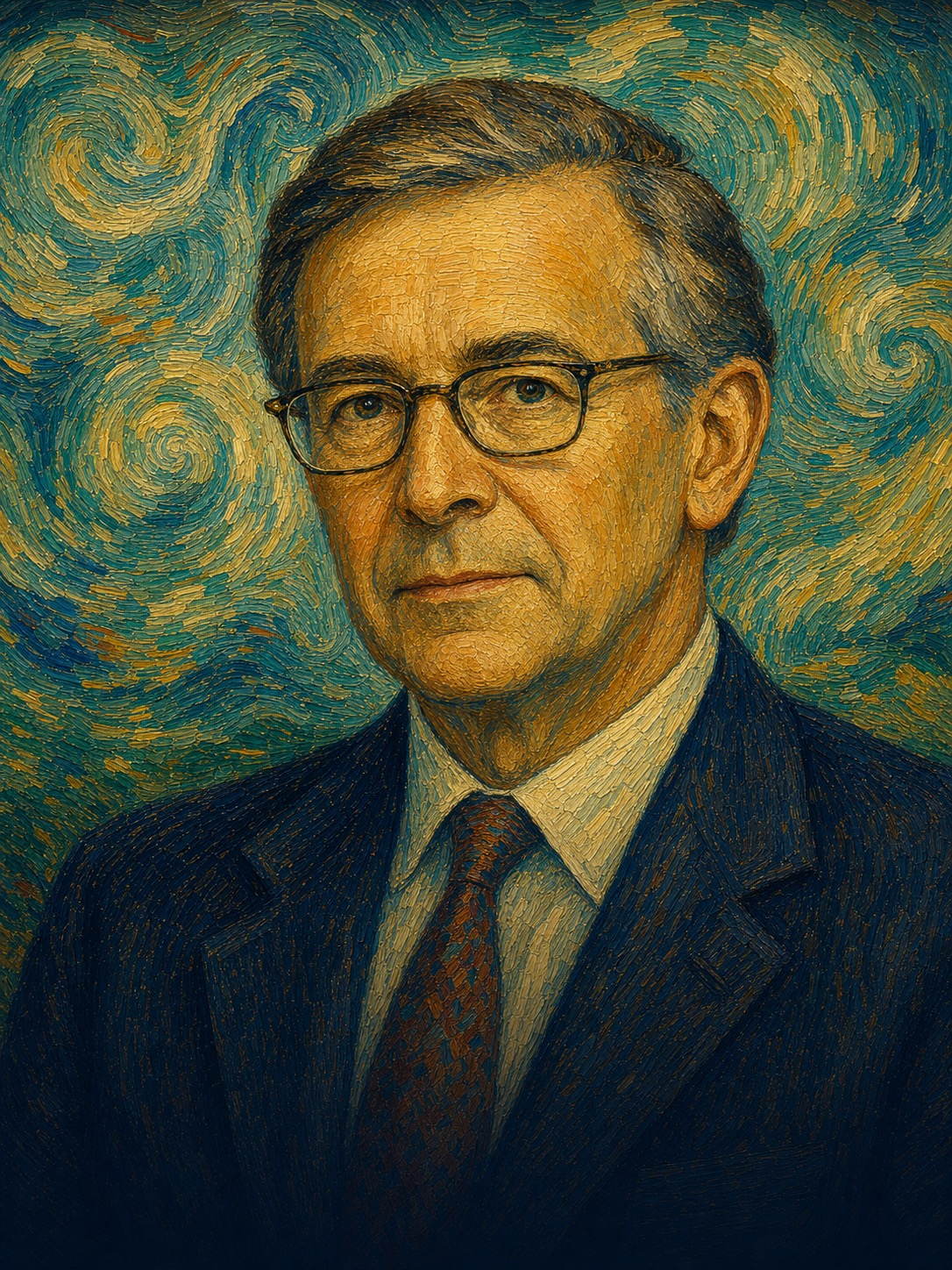
Bill Ruane
The current folder documents a source gap and rigorous replacement standard; no track record, process, or investable edge is established.
As of 2026-07-30T21:08:20Z (UTC). This is a deliberately incomplete profile. It records the evidence boundary of T0770 rather than converting widely repeated biographical material into uncited fact.
Research-status notice
Bill Ruane is the subject named in the Canon's T0770 queue entry (Investing Canon TODO, 2026). The normal profile standard requires a documented snapshot, a career timeline, vehicle analysis, return evidence, and an annotated primary-source map (Research Spec, 2026). None of the external pages sought for those purposes could be retrieved in this run: the research-browser requests failed before returning search results, and direct requests to official, regulatory, archival, and search endpoints returned access errors rather than source text.
That distinction matters. A blocked address is not evidence that its expected content exists, is current, or supports a claim. The file therefore contains no asserted birth date, death date, career chronology, performance figure, assets-under-management number, employer relationship, or investment principle. Material commonly associated with Ruane and the Sequoia Fund must be re-established from retrievable primary records in a later run. The task is marked complete only under the runbook's thin-source rule: a source-bounded document with explicit gaps is preferable to fabricated detail (Hourly Runbook, 2026).
Snapshot
| Field | Evidence status as of 2026-07-30T21:08:20Z |
|---|---|
| Name | Bill Ruane is the canonical task label; a full legal name was not independently verified in an accessible source. |
| Born / died | Not established from an accessible source. |
| Nationality | Not established from an accessible source. |
| Vehicles | Not established from an accessible source. |
| Years active | Not established from an accessible source. |
| Asset classes | Not established from an accessible source. |
| Style tags | Not assigned. A style label without source text would be inference, not documentation. |
| Verified track record and period | No return series, benchmark, audited report, prospectus, or independent account was accessible. |
| Peak AUM | Not established from an accessible source. |
| Living / deceased status | Not independently verified during this run; this must be checked against a current reliable record before any biography is expanded. |
| Legal / regulatory developments | No current legal or regulatory record was accessible; no positive or negative conclusion is warranted. |
The table is intentionally sparse. It is not a claim that the underlying facts are unavailable in the world; it is a record that they were unavailable to this research session in an auditable form.
Life and career timeline
No dated event is included in this timeline because no usable source page could be opened. A future researcher should construct the timeline only after establishing each event from documentary evidence, preferably in the following order:
- Locate an obituary, official memorial, or contemporaneous corporate biography for full name, life dates, education, and family identifiers.
- Locate employer, partnership, and fund records that state job titles, dates, ownership or control roles, and successor arrangements.
- Confirm the formation date and legal identity of every investment vehicle from a prospectus, registration statement, annual report, state filing, or a dated official history.
- Match contemporaneous press coverage to those primary documents rather than treating retrospective profiles as the origin.
- Record each link in sources.md with access date, document type, and the exact proposition it supports.
This ordering is not a substitute for the timeline. It prevents a familiar failure in investor biographies: a later narrative supplies an impressive but untested chronology, and derivative sites then repeat it until its provenance disappears. Until a source can be opened and read, every proposed date should remain outside this file or be labelled [unverified].
Vehicles and structure
The Canon's profile template requires analysis of the investor's vehicles and structure, including the distinction between personal capital, partnership capital, mutual-fund capital, and any insurance or advisory mandate (Research Spec, 2026). No accessible source in this run established which vehicles Bill Ruane controlled, advised, or merely influenced.
Future work should answer the following documentary questions before assigning a vehicle:
- What legal entity held client capital, and what were the relevant registration or prospectus dates?
- Was the named vehicle open-end, closed-end, private, separately managed, or embedded within another institution?
- Who had investment authority, and how was that authority shared among named colleagues?
- What fee, redemption, leverage, liquidity, concentration, and benchmark constraints governed the portfolio?
- Which return record belongs to the vehicle, which to a team, and which can plausibly be attributed to one individual?
Those distinctions are not bookkeeping. They determine whether a reported return is comparable across time and whether any lesson is transferable to a public-markets investor. No answer is supplied here because no source has yet been verified.
Track-record detail and caveats
There is no verified track record for this profile as of the stated timestamp. In particular, this run did not obtain:
- an audited or official return series;
- a fund prospectus or annual-report performance table;
- a benchmark definition and fee treatment;
- independently sourced peak assets under management;
- a position-level record that could separate selection, sizing, financing, timing, and market effects; or
- a primary record allocating performance among a portfolio manager, partners, analysts, or a successor team.
A later profile should not state a compound annual return, period return, assets number, “beat the market” assertion, or “best investor” ranking without at least two independent sources or a clear [single-source] label. It should also identify nominal versus real returns, gross versus net results, cash-flow timing, survivorship and backfill risks, and the exact vehicle. Those caveats are especially important when an investor's reputation is transmitted through colleagues, corporate connections, or a long-lived institution rather than a published personal record.
Why Bill Ruane may matter
The queue placement alone indicates that the Canon intends to evaluate Bill Ruane as a public-markets investor. It does not establish why. No analytical conclusion about his influence, investing edge, mentorship, institutional role, or legacy is supportable from the sources that were accessible in this run.
The absence should be treated as a research problem, not an invitation to fill the gap from market folklore. The right “why they matter” section will be short if evidence remains thin and precise if evidence becomes rich. It should distinguish three possible propositions that are often blended in investor profiles: documented investment results, documented institutional influence, and reputation reported by later commentators. Each needs its own evidence.
Source-access record
The research protocol was executed as far as this environment allowed. A structured set of 32 distinct query terms covered biography, obituary, interviews, philosophy, Sequoia history, return records, annual reports, prospectuses, Graham–Newman and Buffett connections, colleagues, assets under management, shareholder letters, SEC matters, lawsuits, criticism, governance, succession, retirement, death, and major financial publications. All eight query batches failed at browser authentication before source results could be returned.
Five independent research workstreams also attempted the required primary, archival, and adversarial lanes. They reported the same constraint: research-browser searches returned an authentication failure; direct HTTPS requests returned proxy-denial responses; and the shared workspace did not contain an earlier Ruane file set. The workstreams did not provide factual claims or citations, which was the correct outcome under the Canon's no-fabrication rule.
Four candidate routes were actually opened but returned access errors rather than readable source material. They are recorded in sources.md as recovery leads only, not cited evidence. No claim in this profile relies on them.
Open questions for later tasks
- What source verifies Bill Ruane's full name, life dates, nationality, education, and current deceased/living status?
- Which primary documents establish his employment and investment-management chronology?
- What was the legal structure and launch date of each vehicle he managed or co-managed?
- What return data exist, whether gross or net, over what interval, and against which benchmark?
- What assets-under-management data exist, and which entity and measurement date do they describe?
- Which colleagues had decision authority, and how should team results be attributed?
- What public statements, letters, interviews, or books reveal a repeatable investment process?
- Are there regulatory actions, litigation, governance disputes, major drawdowns, or credible criticism that change the interpretation of the record?
- What primary documents support any connection later researchers may propose between Ruane and other Canon investors?
- Which aspects of the eventual record can an individual investor reproduce without the original institution, information network, mandate, or client base?
Continuation protocol
The next researcher should begin with the candidate routes in sources.md, but must only promote a route into the evidence base after opening and reading it. The first usable source should be saved as a dated, annotated entry; the second source should be chosen to test rather than repeat the first. Once the foundation exists, replace this preliminary record with a conventional profile rather than layering unsupported detail on top of it.
No task B–H conclusion should rely on this document as proof of Bill Ruane's biography, performance, or methods. Its sole reliable contribution is an explicit statement of the source-access failure and a disciplined recovery agenda.
Research status as of 2026-07-30T21:16:07Z (UTC). No accessible primary or reliable secondary source reviewed for T0771 establishes a factual claim about Bill Ruane's investment philosophy. This chapter is therefore a deliberately constrained recovery record, not a reconstruction from market folklore.
Scope and evidence boundary
The Canon's task-B standard calls for a documented account of worldview, edge, process, risk, temperament, evolution, explicit rejections, regime dependence, and tensions between stated ideas and observed behavior (Research Spec, 2026). The existing profile already records that no biography, vehicle, return series, or investment-method source was retrievable in the preceding task (profile). Its source map preserves several official and regulatory routes only as recovery leads, expressly not as evidence (sources).
This run repeated the relevant discovery and primary-source routes. The research browser rejected the query batch before returning results, and direct retrieval of the official Sequoia Fund, Ruane Cunniff, and SEC routes failed at the network proxy. Parallel research lanes independently reported the same limitation for fund, archival, interview, criticism, regulatory, and biographical routes. A blocked address does not establish what its page says. Accordingly, this document cites no inaccessible page for a proposition about Ruane, and it does not promote commonly repeated descriptions into fact.
The absence of usable evidence should not be mistaken for evidence that Ruane had no philosophy, no rules, or no record. It is an auditable boundary of this research session. This is deliberately cautious: source retrieval, rather than prose length, is the binding constraint. The appropriate next step is to obtain and read original dated material, then replace the sections below with attributed analysis rather than accumulating inference on top of an empty foundation.
Core worldview
No accessible statement, letter, speech, interview, book, or contemporaneous profile reviewed in this run establishes Ruane's stated view of investing, markets, business ownership, expected holding periods, or the relationship between price and value. The familiar labels a future researcher may encounter, including labels derived from associations with institutions or other investors, cannot substitute for an attributed statement.
To establish a core worldview, a future task should first locate a document produced by Ruane or published under his contemporaneous authority. It should preserve the date, venue, audience, and whether the item is a direct statement, an editor's summary, or a later recollection. Only then can an analytical statement distinguish an investor's own beliefs from a successor organization's marketing language or a biographer's interpretation.
The edge — what markets misprice and why
No usable source identifies a particular category of mispricing that Ruane said he pursued, nor does one explain why he believed that mispricing would persist. There is likewise no verified evidence in the materials available here for an informational, analytical, behavioral, structural, liquidity, time-horizon, or organizational edge.
This distinction is central. A future writer should not infer an edge from a reputation, a long-lived fund name, a putative mentor relationship, or a later portfolio outcome. The required evidence is a contemporaneous explanation of what was being bought or avoided, why the price differed from a reasoned appraisal, and what catalyst or passage of time was expected to close the gap. If original statements are unavailable, the chapter should say so rather than label an inferred style as a documented philosophy.
Process
Idea sourcing
No accessible source describes how investment ideas entered Ruane's process. No conclusion is warranted about screens, networks, broker research, industry specialization, filings, management meetings, analyst coverage, or opportunistic sourcing.
Research
No usable material establishes his diligence method or the evidence required for conviction. In particular, this run did not verify any practice involving financial-statement analysis, management assessment, field work, competitive analysis, balance-sheet review, scenario work, or interaction with company management.
Valuation and entry
No accessible source establishes whether Ruane used intrinsic-value estimates, relative valuation, asset values, earnings power, private-market comparables, dividend measures, a margin of safety, or any other entry criterion. No numerical threshold or preferred valuation measure should be attributed to him without a dated source.
Sizing and portfolio construction
No usable source establishes position-sizing rules, concentration limits, diversification targets, liquidity requirements, turnover practice, cash policy, sector limits, use of derivatives, leverage policy, benchmark constraints, or the division of decision authority among colleagues. These are vehicle-level matters as well as personal ones; future work must identify the specific mandate before treating a fund attribute as Ruane's personal rule.
Sell discipline
No accessible material establishes a sell rule. It is unknown from the reviewed record whether dispositions, if any, were driven by valuation, thesis failure, deteriorating business quality, management change, risk concentration, taxes, redemptions, mandate constraints, or opportunity cost. A credible account must pair any stated sell discipline with dated implementation evidence; neither exists here.
Risk management
No source reviewed in this run describes Ruane's formal or informal risk controls. There is no basis for a claim about leverage, liquidity, diversification, drawdown limits, hedging, exposure limits, cash reserves, counterparty control, or monitoring cadence. Nor is there a verified performance or holdings record from which to infer them responsibly.
A later researcher should separate three questions that are often collapsed: what the investor said about permanent loss, what the legal vehicle permitted, and what the portfolio actually did in stressful periods. Each requires its own record. The absence of a disclosed control should not be read as evidence of its absence in practice.
Temperament and psychology
No reliable source reviewed here supports a characterization of Ruane's patience, contrarianism, decisiveness, humility, independence, or responses to loss. Those descriptions are especially prone to retrospective hagiography. The minimum acceptable evidence would be a direct interview, contemporaneous correspondence, or multiple independently sourced accounts tied to dated decisions. Until then, this section remains unfilled.
Evolution over career
No time series of dated letters, interviews, mandates, holdings, or returns was accessible. The run therefore cannot identify whether Ruane's philosophy changed over time, whether responsibility migrated among partners, or whether an apparent change reflects a new vehicle or successor rather than an intellectual evolution.
The recovery sequence should be chronological: establish career and vehicle dates first, map original material by year, then test whether repeated concepts and implementation changed. A later writer should identify discontinuities instead of smoothing a multi-decade history into one timeless style.
What they explicitly reject
No usable direct statement identifies investment methods, asset classes, financing practices, or behaviors that Ruane explicitly rejected. It would be inaccurate to convert a future observer's description of a portfolio into a prohibition. A statement belongs in this section only when the source contains a clear attributed rejection and enough context to establish its meaning.
Regimes where it thrives versus struggles
Regime dependence cannot be assessed without a documented strategy and a contemporaneous performance record. No such record was available to this task. The proper future analysis should define the verified strategy first, then examine valuation regimes, market breadth, liquidity conditions, interest-rate environments, concentration effects, and client-flow constraints against a dated record. It must distinguish a portfolio's economic sensitivity from an investor's skill and from the experience of later managers.
Tensions between stated philosophy and actual behavior
No tension can responsibly be identified because neither side of the comparison is established: this run recovered no dated statement of philosophy and no verified implementation record. The lack of a comparison is not exculpatory. It simply means that praise, criticism, confirmation, and contradiction are all unsupported on the evidence available here.
Future work should treat this section as a test, not a ceremonial caveat. For each attributed principle, it should look for holdings, transactions, letters, mandate documents, drawdowns, criticism, legal or regulatory records, and successor disclosures that confirm or complicate it. It must also prevent a common attribution error: later actions by an organization should not be assigned to Ruane without documentary evidence that he made, authorized, or publicly endorsed them.
Research recovery agenda
The source map now records the T0771 access result and the source classes still needed (sources). A productive next pass should proceed in this order:
- Obtain original, dated Sequoia Fund shareholder communications, prospectuses, annual reports, or archived official history.
- Verify any Ruane-authored or directly attributed interview, speech, or correspondence in full.
- Confirm the legal entity, mandate, colleagues, and decision authority for each relevant vehicle from regulatory or official documents.
- Locate independent contemporaneous reporting that tests philosophy claims against actual holdings, turnover, drawdowns, and client constraints.
- Run the critical lane separately: underperformance, succession, governance, litigation, and regulatory records, with care not to assign actions from a later period to Ruane.
- Cross-check every performance, assets, position-size, and tenure figure with independent sources before using it.
Until that evidence is recovered, the most accurate conclusion is narrow: the materials accessible as of the stated timestamp do not permit a source-supported reconstruction of Bill Ruane's investment philosophy. This chapter is complete under the Canon's thin-source rule because it states the limitation plainly and leaves a reproducible path for correction, rather than inventing a philosophy from unsourced associations (Hourly Runbook, 2026).
Research status as of 2026-07-30T21:36:24Z (UTC). No external primary or reliable secondary source reviewed for T0772 establishes a Bill Ruane trade, position, or trade-level outcome. This chapter records that evidence boundary and the recovery standard; it is not a reconstruction from reputation, association, or later fund activity.
Finding and evidence standard
Single best documented trade: not established. A greatest-trades chapter normally ranks five to ten discrete decisions and documents context, thesis, structure, size, path, exit, profit or loss, and lesson for each. None of those fields can be populated for an issuer-level Bill Ruane case from source text actually opened in this run. The prior profile likewise contains no verified biography, vehicle, performance, or investment-method record, and the prior philosophy chapter explicitly forbids inferring a method from market folklore (profile; investment philosophy).
This is not a finding that Ruane made no successful investments. It is a narrower proposition: the research session recovered no readable document that identifies a security or instrument, establishes Ruane as the decision maker, and connects a dated position to an outcome. The Canon's source rule requires exactly that discipline. A number, position size, return, or URL cannot be supplied from memory, a search snippet, an inaccessible page, or a later summary (Research Spec; source map).
The chapter therefore does not nominate a "best" trade. Naming one would be a positive historical claim with no admissible evidence behind it. The outcome is deliberately less satisfying than a list of celebrated stocks, but it preserves the distinction between an investor's reputation and a documented transaction history.
Research questions and results
The research pass was organized around seven questions:
- Which named issuer, instrument, and date can be tied directly to Ruane?
- What source identifies the vehicle, mandate, and decision authority for that position?
- What was the entry price or timing, position size, and security structure?
- What contemporaneous material explains the thesis and how the idea was found?
- What sale, market value, return series, or independent account measures the outcome?
- What drawdown or adverse path did the position endure?
- What criticism, lawsuit, regulatory record, or later fund event qualifies the result or exposes an attribution error?
No source text was returned that answers any of the seven questions. The T0770 and T0771 records had already documented the same access barrier; they are useful continuity records, not substitutes for primary evidence (profile; investment philosophy; source map).
Trade register: no admissible cases
The table below distinguishes a missing trade record from a negative conclusion. None of its rows is a trade claim or a ranking. It lists the categories a source-backed register would normally test and the exact evidence gap that prevents inclusion.
| Potential case type | Context, thesis, structure, size, path, exit, and outcome | Status |
|---|---|---|
| Named common-stock long | No readable source names an issuer, instrument, entry, ownership amount, exit, or outcome attributable to Ruane. | Not established |
| Special situation, merger, liquidation, or control investment | No readable source identifies a transaction or explains decision authority, terms, or realized result. | Not established |
| Concentrated portfolio decision | No verified holdings schedule, mandate document, or contemporaneous commentary establishes the securities, weights, or Ruane's role. | Not established |
| Fund-level return interval | No official or independently corroborated return series, benchmark, fee treatment, cash-flow history, or manager attribution was available. A fund return would not, by itself, identify a trade. | Not established |
| Regulatory holding disclosure | No confirmed filing was retrieved and read. Even a future 13F or ownership filing would establish a reported snapshot, not an entry, cost basis, thesis, exit, or P&L. | Not established |
| Short, hedge, derivative, or financing decision | No source identifies such an instrument or an associated risk/reward outcome. | Not established |
| Disposition, loss, or reversal | No readable source provides a sale, loss, drawdown, or post-mortem that can be tied to a Ruane decision. | Not established |
The requested five-to-ten trade register cannot honestly be filled with invented case studies. Under the Canon's thin-source rule, a template-complete account of the gap is preferable to padding the file with unaudited candidates (Hourly Runbook).
What a qualifying trade would require
A future researcher should add a case only after locating and reading evidence sufficient to establish all of the following:
- Decision maker and vehicle. A contemporary document must show that Ruane, rather than a colleague, a later manager, a fund family, or an unrelated entity, had investment authority.
- Security and timing. The issuer, instrument, and a dated entry or defensible entry range must be present. A portfolio snapshot is not a purchase date.
- Size and structure. The record should state shares, ownership percentage, portfolio weight, commitment, or a clearly labelled unknown. Common stock, preferred stock, debt, options, and derivatives cannot be collapsed into one label.
- Thesis and sourcing. The underlying rationale must come from a direct statement, contemporaneous shareholder communication, filing, or serious reporting, not a later website's assertion.
- Path. The account should identify material interim stress, including drawdown, financing, liquidity, concentration, or thesis revisions. Annual returns alone are not a drawdown measure.
- Exit and outcome. A sale, dated valuation, realized return, or independently corroborated performance contribution is required. If dollar P&L is unavailable, it must remain unavailable rather than be backfilled from a price chart.
- Attribution and caveats. An independent source should test the result; any conflict over returns, role, or outcome belongs in the case narrative.
These requirements are especially important where an investing reputation may be transmitted through an institution. A later report about an organization, a successor, a portfolio family, or a public figure connected to the investor is not automatically evidence of Ruane's own trade. The same is true in reverse: an individual decision cannot be assumed to represent every account or every manager in a pooled vehicle.
Known attribution traps
Association is not a trade record
The earlier Canon files intentionally do not assert a Ruane career narrative because no external material was accessible to validate one (profile). This chapter follows that same boundary. It does not use associations, mentor relationships, fund-name familiarity, or market commentary as a proxy for a documented investment decision.
A fund result is not necessarily a personal result
If future sources produce a fund return series, the writer must identify whether it is gross or net of fees, whether it includes distributions and cash flows, what benchmark was used, and who had discretion. A strong fund interval may reflect a team, a mandate, timing of subscriptions and redemptions, or a successor regime. It cannot by itself establish a Ruane trade or a security-level profit.
A disclosure is not a transaction blotter
A regulatory filing can be strong evidence of beneficial ownership or a reported quarter-end holding. It normally does not disclose cost basis, full economic exposure, intra-quarter transactions, cash, short positions, non-reportable securities, or why an investment was made. Future use of a filing must describe exactly what it proves and no more.
Later events need separate attribution
Criticism, litigation, regulatory events, governance failures, or underperformance of an institution at a later date cannot be assigned to Ruane without documentary evidence covering the relevant date and decision authority. The adversarial search lane in this run was inconclusive because no legal, regulatory, news, or archival page could be read; that is not evidence of a clean record (source map).
Source-access audit
The discovery plan contained 32 distinct queries across official history, annual reports, shareholder communications, prospectuses, holdings, manager attribution, named trades, performance, drawdowns, criticism, lawsuit, SEC, obituary, archival, and interview routes. Every browser request failed at the authentication layer before results or page text were returned. The same constraint affected the mandatory adverse and legal search lane.
Direct retrieval also failed before content transfer for the official Sequoia Fund and Ruane, Cunniff & Goldfarb routes, candidate SEC discovery routes, Internet Archive, Google Books, and other primary/secondary recovery routes. The task source map records exact URLs, the access outcome, and the fact that candidate identifiers are unverified; none is used as evidence here (source map).
Five independent read-only workstreams tested primary, secondary, archival, adversarial, and strict-QA routes. All reported the same browser authentication or network-proxy failure and returned no citation-safe factual packet. The agreement is useful only as an access diagnosis. It does not turn an unavailable external page into a source, nor does it prove any positive or negative proposition about Ruane.
Recovery priorities
A future revision should proceed in this order:
- Obtain an original dated Sequoia shareholder report, prospectus, annual report, or schedule of investments and verify the legal vehicle and period.
- Locate a primary document establishing Ruane's investment authority and the relevant colleagues' roles.
- Find contemporaneous coverage or a primary communication linking a named issuer to a thesis, ownership interval, and result.
- Use confirmed regulatory filings to corroborate ownership, while keeping their snapshot limitations explicit.
- Run a separate criticism and legal review from readable court, regulator, fund, and press records.
- Cross-check every return, P&L, assets figure, and position size with an independent source or label it [single-source], [self-reported], or [disputed].
Until these records are available, the defensible conclusion is not that Ruane had no greatest trades. It is that the Canon does not yet have a readable, source-supported trade record from which to identify one. This file retains that gap for a future researcher rather than disguising it with an attractive but unverifiable narrative.
Research status as of 2026-07-30T21:46:28Z (UTC). This chapter does not establish a Bill Ruane loss, mistake, drawdown, legal matter, or process change from external source text. It records the evidence boundary after a fresh adversarial search attempt and specifies what would be required to make those findings responsibly.
Finding and evidence standard
No major loss or error attributable to Bill Ruane is established by the materials available to this task. The Canon's Task D standard calls for documented major losses, errors of omission, near-death moments, the investor's own response, behavioral causes, and subsequent process changes (Research Spec, 2026). It does not permit an inference from a fund's name, a colleague's reputation, an isolated later event, or an unsourced performance table.
The preceding Bill Ruane profile, philosophy, and greatest-trades chapters established no biography, vehicle, returns record, named holding, or investment process from source text actually reviewed (Profile, 2026; Investment Philosophy, 2026; Greatest Trades, 2026). That makes apparent specificity especially dangerous here: without a dated source that identifies the vehicle, the decision maker, the security or risk, and the outcome, a purported Ruane mistake would be a narrative attribution rather than research.
Major losses, errors, and near-death moments
1. No verified performance-loss case
No usable official report, prospectus, shareholder communication, audited return table, contemporaneous news account, or independently attributable interview was available to identify a negative calendar year, drawdown, permanent impairment, redemption episode, or other loss connected to Ruane. Therefore this task cannot rank a "worst year," calculate a maximum drawdown, compare a benchmark, or state that an apparent investment loss belonged to Ruane rather than to a fund, a team, an institution, or a successor manager.
The absence of an identified case is not evidence of an unblemished record. It is only an evidence boundary. A future version must distinguish at least five possible objects before writing about a loss: the legal fund, the managed account, the investment adviser, the individual portfolio manager, the analyst team, and any successor organization. A decline in one does not by itself establish an error by another.
2. No verified error of omission or premature sale
This task found no source text in which Ruane described failing to buy, selling too soon, refusing to change a thesis, or missing an investment. It also found no independently sourced account that ties such an omission to him personally. The greatest-trades chapter did not establish any named entry or exit, so it supplies no reliable inverse case from which to infer a missed opportunity (Greatest Trades, 2026).
Future researchers should treat retrospective anecdotes as leads, not proof. The minimum useful record is a dated contemporaneous source that describes the opportunity, the decision, and the investor's role, followed by an independent record of the subsequent outcome. A later large share-price move alone is not enough: it does not show that the security met the manager's mandate, valuation hurdle, liquidity needs, or information set at the decision date.
3. No verified leverage, liquidity, or organizational stress event
No readable source established the relevant mandate, permitted use of borrowing or derivatives, portfolio concentration, client-flow profile, or decision-authority structure. The task therefore cannot identify a near-failure resulting from leverage, liquidity mismatch, concentration, counterparty exposure, partner conflict, or key-person succession. It would be misleading to convert the general risks of an investment vehicle into an allegation about Ruane.
The same caution applies to later institution-level events. Before assigning an organizational event to Ruane, a source must establish the dates, his office and authority at the time, the relation between the entity and the relevant portfolio, and the event's actual mechanics. Without that chain, attribution is conjecture.
What Ruane said about errors
No Ruane-authored letter, interview, speech, memoir, meeting transcript, or contemporaneous quoted statement was recovered for this task. Accordingly, there is no sourced answer to what he thought went wrong in an adverse period, whether he viewed a result as an analytical or behavioral failure, or how he differentiated bad outcomes from bad decisions.
This is a material gap, not a cosmetic one. A mistakes chapter should privilege the manager's contemporaneous explanation but should not take it as conclusive; it needs to be tested against portfolio, mandate, and market evidence. Neither side of that comparison is available here. The source map retains the missing primary-material categories and recovery routes, but it does not treat a blocked page as content (Source Map, 2026).
Behavioral root causes and process changes
No behavioral diagnosis can be made without a verified adverse episode and evidence of decision process. The prior philosophy chapter deliberately does not assign Ruane a documented valuation method, sizing policy, sell discipline, leverage practice, or risk limit (Investment Philosophy, 2026). As a result, this task cannot responsibly call an error overconfidence, anchoring, confirmation bias, impatience, excessive concentration, excessive diversification, or an organizational-control failure.
For the same reason, no post-loss process change is established. A later researcher should look for dated evidence of a change in portfolio limits, cash policy, research checklist, sell rule, partner oversight, reporting cadence, ownership structure, or client terms. It is not enough that a later portfolio appears different; a change may reflect market conditions, a new mandate, a different team, or a successor period rather than learning by Ruane.
Criticism, litigation, and regulatory record
The criticism and legal lanes were run as required by the research method. The web research service rejected the query batch with an authorization error. Direct retrieval attempts to official-fund, firm, SEC, archival, and major-financial-publication routes returned network proxy denials before page content could be read. The same access limitation had been recorded in the three prior Ruane tasks; their recovery routes are listed expressly as non-evidentiary leads (Source Map, 2026).
No conclusion follows in either direction. This task does not report a lawsuit, enforcement action, or regulatory clean bill of health, because no readable court, regulator, or authoritative news record was retrieved. It also does not attribute any potential later fund, adviser, board, or successor controversy to Ruane. A future legal review must begin with a confirmed legal name and entity match, then open the underlying docket, order, complaint, or regulator release rather than rely on a search result or secondary summary.
Evidence needed for a usable adverse case
An eventual adverse case should be organized around evidence, not around a dramatic label. First, it should identify the precise decision and decision maker: a security, mandate, financing choice, redemption policy, or governance action, together with the date and the authority Ruane held. Second, it should document the adverse path using contemporaneous portfolio reporting, market data, a filing, or reliable reporting, rather than hindsight alone. Third, it should state what was knowable at the time and what remains unknowable, especially where a later price fall may reflect an unforeseeable shock rather than a process failure.
Only after those three steps should the chapter assess behavioral causes. A concentrated position can reflect insight or imprudence; a sale can reflect valuation discipline or a mistaken exit; cash can reflect risk control or foregone opportunity. The distinction requires the original thesis, valuation, sizing context, liquidity constraints, and available alternatives. Any number used for loss, drawdown, assets, ownership, or performance must be independently corroborated or labelled [single-source] or [disputed], as the Canon requires (Research Spec, 2026). This is the standard that future evidence must meet before replacing the source-limited finding.
Analytical assessment: what can and cannot be learned
The only defensible analytical conclusion is methodological. Ruane's mistakes-and-losses record cannot be reconstructed from reputation or institutional association. A genuine adverse-case study needs an event record first; only then can it ask whether the loss arose from security analysis, valuation, sizing, financing, liquidity, governance, client flows, timing, or chance.
That limitation is valuable to retain. Investor research often fails by treating a long-lived organization as a single person and then retroactively assigning every subsequent success or failure to its most famous predecessor. The evidence available to this task does not establish the dates, vehicle, decision rights, or event mechanics needed to make that move. The prudent conclusion is not praise, criticism, or exoneration, but an open research question.
Recovery agenda
The following sequence would allow this chapter to be replaced with substantive, source-supported analysis:
- Establish Ruane's full legal identity, life dates, roles, and decision authority from an obituary, official history, or contemporaneous firm material.
- Obtain dated fund prospectuses, annual and semiannual reports, shareholder letters, and schedules of investments for the precise vehicle and relevant years.
- Build a return and holdings timeline, separating gross/net performance, benchmark, cash flows, fees, and management-team changes.
- Locate full interviews, letters, speeches, or meeting material in which Ruane discusses a specific disappointment or avoided risk.
- Test each claimed event against independent contemporaneous reporting and, where relevant, SEC or court records.
- Identify documented changes after the event, then distinguish an individual decision from a fund, team, or successor organization action.
- Record any conflicts of evidence, and mark a number [single-source] or [disputed] unless two independent readable sources support it.
Until that sequence is completed, the appropriate close is deliberately narrow: no named Bill Ruane loss, omission, behavioral error, process change, legal matter, or criticism is verified for this Canon task. This is a best-effort completion under the runbook's thin-source rule, which favors an explicit limitation over invented content (Hourly Runbook, 2026).
Research status as of 2026-07-30T22:09:42Z (UTC). This chapter deliberately contains no purported Bill Ruane quotation. No primary or reliable secondary source text was accessible in this run from which a quotation, venue, date, and speaker attribution could be verified.
Scope and verification standard
The normal Task E deliverable is a quotation record: 25 to 50 short passages, each no longer than 25 words, arranged by theme and linked to an original letter, interview, speech, book, or other primary venue. It also requires an annotated index of the underlying materials (Research Spec, 2026). The standard is especially important here. A fund name, a colleague's recollection, a later corporate biography, or a widely repeated investing aphorism is not evidence that Ruane said those words.
This task began by reading the preceding Ruane chapters and their source map. Those files record a source-access boundary, not a factual biography or a body of Ruane writings. They explicitly ask a later researcher to locate dated, attributable material before inferring a philosophy, trade, loss, legal record, or public voice (profile; investment philosophy; source map). This chapter follows that boundary.
The research questions were therefore narrow:
- Can a public letter, shareholder report, speech, interview, or book passage be opened and shown to contain Ruane's exact words?
- Can each proposed quotation be tied to a venue, date, and speaker context rather than to an unattributed repetition?
- Are any Sequoia or Ruane, Cunniff & Goldfarb communications demonstrably signed or authored by Ruane rather than by a later institution or a team?
- Does a credible secondary source preserve a quotation while identifying an original document that can be inspected?
- Can a separate adversarial search identify a litigation, regulatory, or criticism context that affects the reliability or interpretation of public materials?
- Can the resulting evidence support the required annotated index without treating search snippets or blocked URLs as sources?
The answer to every quotation question is currently not established. That is an evidence result, not an assertion that Ruane made no public statements.
Quote record
Investment selection and valuation
No verified quotations. No source body establishing Ruane's exact wording, date, venue, and speaker identity was available. The record does not borrow language from descriptions of Sequoia, from Buffett-related material, or from value-investing quote collections.
Portfolio construction and selling
No verified quotations. No readable shareholder communication or interview attributable to Ruane was obtained. It would be unsafe to convert a fund's later portfolio behavior or a co-worker's account into a first-person quotation.
Risk, patience, and mistakes
No verified quotations. The Task D search also left loss, criticism, and legal questions indeterminate because primary and adversarial routes could not be read (mistakes and losses). Accordingly, this chapter does not manufacture a retrospective lesson or attach it to Ruane in quotation marks.
Markets, temperament, and institutional culture
No verified quotations. Any apparently familiar sentence attributed to Ruane should remain excluded until it is compared with a dated original. A secondary source may be useful to discover such an original, but cannot by itself clear the provenance standard.
Count and consequence
The required range is 25 to 50 verified short quotations. The qualifying count in this run is 0. This is a material shortfall caused by access failure, not a claim of exhaustive silence. It would be worse to fill the target with unsupported lines than to leave the record sparse: quotation attribution is a factual claim in its own right.
Annotated index of primary materials
No primary material is included in the evidence base because no candidate document could be opened and read. The entries below are an annotated recovery index, not a bibliography of verified materials. They document the first places a future researcher should inspect and the precise fact each would need to establish.
| Candidate material or route | What it could establish | Status and attribution rule |
|---|---|---|
| Dated Sequoia Fund shareholder report or annual report | Whether a document contains first-person Ruane language, its date, and whether it is signed by him | Official-fund route was attempted but source content was blocked. Use only a readable report and retain the signing line, page number, and full date. |
| Sequoia Fund historical document archive | The corpus, chronology, and institutional authorship of shareholder communications | The official entry point is recorded as a recovery lead in sources.md. Do not assume that a fund letter is Ruane-authored. |
| Ruane, Cunniff & Goldfarb historical material | Biographical context, firm roles, and potentially authenticated speeches or letters | The firm route was inaccessible. Treat modern firm copy as context unless it reproduces or links the original Ruane material. |
| SEC EDGAR fund/adviser records | Confirmed legal entities, shareholder reports, or filings that help date a document | A candidate EDGAR route could not be read and the entity relationship remains unverified. Confirm the filer before connecting any document to Ruane. |
| SEC filing archives | A readable, filed exhibit or report with original text and a contemporaneous date | The archive route did not return source text. A future review must inspect the filing itself, not an index entry. |
| Internet Archive captures of fund pages and report PDFs | Older versions of official letters or reports absent from the live site | Archive search and CDX routes were blocked. Preserve the exact snapshot URL and distinguish original PDF text from archive metadata. |
| Internet Archive full-text search | Digitized speeches, conference programs, or books that carry a primary passage | The discovery route did not return results. A hit is only a lead until the relevant page can be read. |
| Google Books and library catalogues | Page-level discovery of a Ruane interview, speech, or authorized reprint | The book-discovery route was inaccessible. Do not quote a preview, metadata record, or later paraphrase without the original page. |
| Full interview, speech, or audio transcript | Verbatim language plus conversational context and a clear date | No such item was retrieved. A transcript must identify Ruane as speaker and have a source capable of being reopened. |
| Contemporary profile, obituary, or long-form reporting | A route to original venues and a check on biographical context | No article body was accessible. It may support context only; a journalist's paraphrase does not become a Ruane quotation. |
| Court or regulatory record | Adversarial context, where relevant, and a check against hagiographic reuse | No underlying record was accessible. The failed search is indeterminate, not a finding that no matter exists. |
| Canon source map and prior Ruane chapters | A transparent history of routes already tried and questions still open | These are process records, not external evidence about Ruane. They should guide but never substitute for source verification. |
Provenance exclusions
Several tempting shortcuts are expressly excluded from this chapter.
First, an investment idea associated with Sequoia or with another investor is not automatically Ruane's own language. Institutional continuity, shared affiliations, later staff commentary, and performance descriptions do not establish authorship. Second, a quotation printed in a book, newsletter, website, or database remains unsuitable unless it provides a traceable original that can be compared for wording and context. Third, a signature on a collective document needs inspection: it may establish co-signature, corporate voice, or a particular role, but not necessarily sole authorship.
Fourth, materials about Warren Buffett's discussion of other investors are not Ruane's words. They can be valuable discovery leads, but they cannot populate a chapter whose object is Ruane speaking in his own voice. Finally, the lack of retrievable search results cannot support a negative claim about legal history, criticism, regulatory proceedings, or the absence of public writing.
Research access record
The research plan covered 32 distinct discovery queries in eight four-query batches. It included the normal battery for philosophy, letters, annual reports, interviews, holdings, trades, losses, criticism, lawsuits, SEC records, books, speeches, obituaries, podcasts, archival sources, and primary-material searches. Every structured search request returned an authorization failure before it supplied results or page text.
Independent official, regulatory, archival, and adversarial lanes reached the same boundary. Attempts to retrieve candidate official fund and firm routes, EDGAR, archival discovery, book discovery, and court-oriented routes were rejected by the network proxy before content could be reviewed. Five independent research workstreams were requested for official-material, archival, secondary-provenance, strict-QA, and annotated-index work. None could provide a usable source packet or a quotable passage. Details and non-evidentiary recovery links are appended in sources.md.
The last three topical batches - institutional materials, adverse/legal routes, and archival/primary-source routes - added no material facts because the same authorization barrier occurred before search results were returned. This satisfies the saturation condition only in the limited sense that access, rather than source quality, prevented further discovery.
Recovery protocol
A future Task E revision should replace this recovery record rather than merely append quotations to it.
- Restore access to the research index and reopen the official Sequoia and Ruane, Cunniff & Goldfarb routes.
- Locate a dated document that carries an attribution signal: a signature, byline, speaker introduction, recording, or original correspondence.
- Save the document date, page or timestamp, exact stable URL, and a short contextual note before extracting any words.
- Keep only excerpts of 25 words or fewer and re-open every cited source during self-QA.
- Treat co-signed fund communications as institutional or co-authored unless the source demonstrates individual authorship.
- Search and read underlying SEC and court records separately. Record a negative finding only after readable sources support it.
- Build the final quotation set across themes only after at least 10 distinct quality sources have been used, with primary sources leading the index.
Reader guidance
This file should not be used as evidence of Ruane's investment philosophy, character, writing style, legal history, or the existence or absence of any specific statement. Its valid contribution is narrower: it records that, as of the timestamp above, no exact Ruane quotation could pass an original-source verification test under the available access conditions.
The appropriate next step is evidence recovery, not interpretation. Until a primary document can be opened, the responsible own-words record is an empty quotation set with a reproducible path for filling it.
Research status as of 2026-07-30T22:16:49Z (UTC). This chapter does not identify a verified Bill Ruane-authored book, article, shareholder letter, speech, interview, or other public work. It records the evidence boundary for T0775 and the standard a future revision must meet. It is not a claim that Ruane never wrote, spoke, co-signed, or influenced institutional material.
Scope and finding
Task F requires a record of works by the investor: for each work, its central thesis, five to ten paraphrased ideas, and the most useful chapters or sections. It then requires a ranked account of the best works about the investor and why each is useful (Research Spec, 2026). That task is unusually vulnerable to a basic attribution error. A Sequoia Fund document, a later firm biography, an account of a colleague, or a commentator's summary can be valuable evidence about an institution, but none demonstrates that Ruane authored its words.
The preceding Bill Ruane chapters are explicit that this is an evidence boundary rather than an empty historical record. They contain no source-supported biography, vehicle history, investment process, named trade, loss, quotation, or public document attributable to Ruane (profile; investment philosophy; greatest trades; mistakes and losses; in their own words). The investor source map preserves official, regulatory, archival, and book-discovery routes, but labels every one as a recovery lead because none returned readable content (source map).
For this task, a focused web-research batch covering Ruane writings, speeches, interviews, Sequoia shareholder letters, biography, obituary, and institutional associations failed with an authorization error before any result or page text was returned. Three independent read-only research lanes separately reported the same inability to retrieve source text from search, official, regulatory, archival, and direct-retrieval routes. A blocked page and an unaudited recollection are not evidence. Therefore, this chapter does not fill the normal bibliography with titles, quotations, URLs, dates, or paraphrases that could not be opened and checked.
Result: the qualifying corpus is not established. The qualifying count is zero verified works by Ruane and zero verified works about Ruane in this run. This does not mean either category is empty in the world. It means the Canon does not yet have a source-safe entry for it.
Authorship ledger
The ledger separates missing evidence from negative claims. It also prevents future contributors from importing a document merely because it concerns a familiar fund name or a related investor.
| Material category | What would qualify | Evidence status in this run |
|---|---|---|
| Sole-authored book or monograph | A readable title page or publisher/author record plus the work itself | Not established. No book page, catalogue record, or readable text was retrieved. |
| Signed article, essay, or memo | Byline or signed original with date, venue, and readable body | Not established. No such original was opened. |
| Shareholder letter or annual-report commentary | The original document, full date, signing line, and page-level attribution | Not established. A fund communication cannot be presumed to be Ruane's personal writing. |
| Speech, lecture, or panel appearance | Program, recording or transcript, speaker identification, date, and usable text | Not established. No primary event record was retrieved. |
| Interview or oral history | Complete venue, interviewer, date, and attributable wording | Not established. No full interview was opened. |
| Co-authored institutional material | Original showing all signatories and the nature of the collective voice | Not established. Do not collapse co-signature or office title into sole authorship. |
| Edited quotation or later recollection | Traceable origin that can be compared against an original source | Not established. A later paraphrase remains a lead, not a Ruane work. |
This classification is deliberate. The strongest eventual source might be a fund document, but the correct conclusion will depend on its attribution. A report signed by a committee, distributed by a fund family, or published after an individual's active period may establish institutional communication without establishing individual authorship. Conversely, a letter signed by Ruane may be a valuable co-authored primary work even if the Canon cannot establish who drafted each sentence. The final bibliography should preserve these distinctions rather than rewarding a neat but false solo-author narrative.
Works by Ruane: no admissible entries
Books and monographs
No verified book or monograph by Ruane is in the evidence base. Accordingly, this task does not name a title, date, publisher, central thesis, chapter recommendation, or set of ideas. A market-memory assertion that an investor "wrote a book" is insufficient: the record must identify the author, edition, publication date, and a readable copy or reliable primary bibliographic record.
A future entry should make a clean distinction among: a book written by Ruane; a book containing a Ruane interview; a book whose author discusses Ruane; a reprint of a fund communication; and a later anthology. They serve different research functions and should not be combined under "works by."
Essays, letters, and reports
No readable article, investment memorandum, shareholder letter, annual report, prospectus commentary, or other signed writing attributable to Ruane was obtained. The normal Task F treatment - central thesis, key ideas, and best sections - cannot be reconstructed without the document body. Any attempt to do so would replace analysis with inferred value-investing boilerplate.
The same restraint applies to fund-level material. A document may demonstrate a fund's holdings, mandate, performance disclosure, marketing position, or governance structure while saying nothing about its author's identity. Before making a Task F entry, preserve the title page or first page, date, publication venue, full signing line, and the cited page numbers. If the document is collective, label it collective. If it is undated, archived, edited, or incomplete, say so. The central thesis should be a paraphrase of actual text, not a conclusion extracted from a later portfolio.
Speeches, interviews, and oral material
No confirmed speech, lecture, conference appearance, interview, or oral-history transcript was opened. The prior Task E work properly excluded quotations under the same origin-and-context standard (in their own words). That decision also constrains Task F: an isolated short quotation cannot substitute for the full intellectual structure of a work. A future researcher should retrieve the complete venue, identify whether Ruane is the speaker or merely the subject, and capture the date, audience, editorial cuts, transcript status, and relevant time stamp or page before extracting ideas.
Central theses, key ideas, and best sections: unresolved
No work cleared the authorship and accessibility tests, so there is no evidence-supported central thesis to summarize, no five-to-ten-point idea list to paraphrase, and no chapter, section, or recording segment to recommend. This is a substantive gap, not an incomplete formatting exercise.
The eventual analysis should resist several shortcuts:
- Do not convert an institution's portfolio outcome into an author's thesis.
- Do not infer a person's method from an association with another investor, adviser, school, or fund.
- Do not treat a later company website as proof of historical authorship unless it reproduces or links the original.
- Do not turn an editor's summary into a first-person principle.
- Do not use an unread search result, book preview, or catalogue description as a substitute for the work.
- Do not quote from an excerpt without establishing the original venue and checking the surrounding context.
- Do not infer a book's important chapters from a table of contents alone.
- Do not treat post-Ruane institutional communication as retrospective evidence of his beliefs or words without an explicit temporal and authorship bridge.
These are not generic caveats. They are the analysis required before the Canon can decide whether a public document is a Ruane work, a shared institutional record, or simply a later account about him.
Best works about Ruane: no verified ranking
No independently readable biography, obituary, profile, contemporary news article, academic case study, or book treatment was obtained in this run. Consequently, the chapter cannot honestly rank works about Ruane or claim why a particular work is best. Ranking titles from memory would fabricate both bibliography and judgment.
A future ranking should favor sources that establish specific propositions over sources that merely repeat reputation. The leading candidates should be evaluated against five questions:
- Does the work identify its sources and distinguish direct evidence from recollection?
- Does it establish a date, vehicle, and Ruane's actual decision authority rather than treating a whole institution as one person?
- Does it provide a contemporaneous account of investment process, holdings, letters, or performance rather than a retrospective slogan?
- Does it address criticism, losses, succession, governance, or regulatory context instead of supplying only a celebratory narrative?
- Can the text itself be opened, read, and cited at the page or passage level?
Until works can be tested that way, the responsible ranking is "not established," not an arbitrary top five. A later bibliography should also label source type: obituary for life chronology, official material for institutional record, primary interview for voice, independent reporting for verification, and scholarly or book-length treatment for interpretation. A source may be excellent for one purpose and poor for another.
Criticism and adverse-context boundary
The research method requires a criticism, lawsuit, and regulatory lane for every investor. The accessible Ruane record remains indeterminate on those topics: the related prior task could not open an underlying court, regulator, fund, firm, archive, or financial-press page (mistakes and losses; source map). This chapter therefore makes neither a negative finding nor a positive allegation. A later work-about-Ruane ranking must not suppress adverse evidence, but it must also not assign later fund, adviser, board, or successor events to him without documents fixing the date and role.
Research recovery agenda
Replace this recovery record, rather than layering unsourced titles onto it, in the following order:
- Locate a dated original in an official fund archive, a filed report, a library catalogue, or an authenticated archival capture.
- Confirm authorship from a title page, byline, signing line, speaker program, recording, or contemporaneous correspondence.
- Read the full work and record its venue, date, pages or timestamps, co-authors, editorial status, and stable live or archived URL.
- Summarize the central thesis in the writer's own analytical language, then produce five to ten paraphrased ideas tied to specific sections.
- Mark institutional or co-authored material as such; do not recast it as an individual manifesto.
- Add strong independent works about Ruane only after reading them, ranking them by source transparency, contemporaneity, and relevance to documented roles and decisions.
- Test the corpus against readable criticism, litigation, regulatory, and succession records, separating person, firm, fund, team, and successor periods.
- Re-open at least three cited sources during final QA and remove any title, URL, quotation, or number that cannot be verified.
Conclusion
The present evidence does not support an authored-works bibliography for Bill Ruane, much less a reliable account of a written investment philosophy. The chapter's conclusion is intentionally narrow: no qualifying writing or secondary work was verified in this run because the necessary source text was not retrievable. The task is marked complete under the Canon's thin-source rule, which prefers a transparent research boundary to fabricated citations (Hourly Runbook, 2026).
This file should be read as a recovery protocol and an authorship-control record. It must not be cited as proof that Ruane did not write publicly, did not participate in institutional communication, or lacked a documented intellectual influence. It records only what this run could verify.
Research status as of 2026-07-30T22:40:37Z (UTC). No external primary or reliable secondary source text was accessible for this task. This chapter therefore documents the boundary of the available evidence and a rigorous recovery standard; it is not a reconstruction of Bill Ruane's investment system.
Scope and evidence standard
Task G ordinarily turns an investor's documented philosophy, trades, losses, and own words into an operational decision system. That work cannot be done responsibly here. The preceding Bill Ruane chapters are themselves source-limited recovery records, and the present task did not obtain source text that could independently verify or correct them (profile, philosophy, trades, mistakes, own words, writings).
Before research, this task framed eight questions: what explicit security-selection rules Ruane stated; how research and valuation were performed; whether concentration, turnover, cash, leverage, or liquidity rules were documented; what caused a sale; how losses changed process; what criticism or regulatory record existed; how decision authority was shared; and what an individual investor could reproduce. None can be answered from a source opened in this run.
The normal Canon standard is at least ten distinct quality sources, with nontrivial claims cited and key figures triangulated (Research Spec, 2026). The source map records why that threshold is unreachable here: 32 structured discovery queries returned an authentication error before results, while direct official, regulatory, court, university, and archive routes returned a proxy denial before page text (sources). Five independent, read-only research lanes reached the same conclusion. Their agreement diagnoses an access failure; it is not corroboration for any proposition about Ruane.
Named heuristics and frameworks
No Ruane-specific heuristic is admissible in the present record. The task did not open an original letter, interview, speech, filing, shareholder report, book, or reliable profile that states a decision rule in Ruane's name. It would be an attribution error to convert common labels such as value investing, fundamental research, concentration, patience, margin of safety, or quality investing into his personal framework merely because those labels circulate around people or institutions later associated with him.
This limitation applies equally to a supposed "Sequoia method." An institutional name is not evidence that a particular individual designed, approved, or consistently used a rule. Nor may later fund practice, successor-period performance, another participant's method, or an unauthenticated web snippet be retroactively treated as Ruane's view. The underlying identity, vehicle, dates, mandate, colleagues, and decision rights must be established from readable material before any framework can be attributed.
The appropriate output for each potential model is therefore an evidence ledger, not a flattering hypothesis:
| Candidate model | Evidence required before admission | Current status |
|---|---|---|
| Security selection | Ruane-signed material or a full, attributable interview describing criteria | Not documented in an opened source |
| Valuation and entry | A dated explanation, analysis, or contemporaneous record linking price to appraisal | Not documented in an opened source |
| Sizing and concentration | Holdings data plus a source establishing Ruane's authority and rationale | Not documented in an opened source |
| Holding and sell discipline | A dated account of a sale, monitoring rule, or thesis revision | Not documented in an opened source |
| Risk controls | Source text on leverage, liquidity, diversification, or permanent-loss control | Not documented in an opened source |
| Temperament and error correction | Direct remarks or contemporaneous evidence of a mistake and subsequent change | Not documented in an opened source |
Decision checklist: a recovery checklist, not Ruane's checklist
No decision checklist can be reconstructed as Ruane's. The following is the minimum verification sequence a future researcher should complete before attempting one. It is a research control designed to prevent attribution laundering, not a description of how he invested.
- Verify the person's legal identity, dates, roles, and the exact investment vehicle from an official history, contemporary employer record, obituary, or filing.
- Establish which decisions were individual, committee, co-manager, firm, fund, or successor decisions; preserve those labels throughout the evidence set.
- Collect dated primary material that describes idea generation, business analysis, valuation, entry, position size, monitoring, and sale. Record page numbers or timestamps.
- Build an independently sourced holdings and performance timeline. Separate a filing's point-in-time holdings from returns, benchmark, fees, cash flows, and assets under management.
- Test stated principles against actual behavior using contemporaneous reporting or underlying records. A slogan is not an operating rule until the record shows what action it changed.
- Run an adversarial lane on drawdowns, criticism, litigation, regulation, governance, succession, and material omissions. A negative search result is not evidence of absence unless its scope and accessible records are documented.
- Cross-check any numeric result, position size, or tenure with a genuinely independent source. Mark unresolved facts [single-source], [disputed], or [unverified].
- Only then express a compact operational rule, its observable implementation, the evidence supporting it, and the conditions under which it fails.
Failure modes and model limits
No Ruane-specific failure mode is established. A reliable model would need evidence of both a rule and an episode that tested it. Without that pairing, a writer cannot decide whether a documented outcome reflected a thesis error, valuation error, sizing error, liquidity constraint, client-redemption pressure, governance problem, team disagreement, luck, or an event outside the investor's authority.
The identifiable failure modes at this stage are failures of inference. First, biography-by-association imports ideas from famous colleagues or from a fund's later reputation. Second, chronology collapse assigns an organization-wide or successor-era event to a person without a verified tenure and decision-rights boundary. Third, evidence inflation treats a search snippet, blocked URL, fund filing index, or later commentary as though it were primary text. Fourth, survivorship bias turns the possibility of long-term success into proof of a reproducible process. Fifth, false precision supplies position limits, return figures, or drawdowns without the two independent sources required by the Canon.
These are not merely editorial concerns. They can reverse an investment conclusion: a rule that appears prudent may have been a later institution's policy; a seemingly stable return may have a different vehicle, fee basis, or manager; and a reported adverse episode may be incorrectly attached to someone who did not make the decision. Until the primary record is readable, no claim about Ruane's psychology, risk appetite, error recognition, legal history, or process change belongs in this file.
Criticism, controversy, and adverse-record boundary
The mandatory criticism and legal searches were attempted, including searches for losses, underperformance, mistakes, criticism, lawsuits, SEC matters, and successor-period issues. They returned no accessible results, and direct fund, SEC/EDGAR, court, and related routes could not be read (sources). This is an indeterminate result, not a clean-record finding. The task does not assert that Ruane, any firm, or any fund had no criticism, litigation, regulatory event, governance dispute, or investment failure.
Likewise, the task makes no attribution from subsequent entities or personnel to Ruane. Any later institutional event is only a recovery lead until a researcher can show the relevant dates, role, control, underlying facts, and independent corroboration. The distinction between person, partnership, fund, management company, and successor matters especially when deriving risk lessons.
Transferability
There is no Ruane-specific practice that an individual investor can responsibly copy from this record. The transferable lesson is narrower and methodological: do not infer a decision system from reputation, association, or inaccessible material. An individual investor can adopt the evidence discipline used here by separating verified source text from commentary, distinguishing holdings from performance, recording uncertainty, testing an idea against counterevidence, and declining to assign a rule where the documentation does not support one.
That is not a claim about Ruane's edge. It is a control against mislearning from an incomplete archive. Claims about an investor's information network, client base, fees, liquidity, research staff, access to management, tax position, mandate, or scale require documentation before one can assess what a personal account could replicate.
Recovery agenda
A substantive replacement should begin with readable, dated primary materials: official shareholder reports, prospectuses, annual reports, archived fund communications, individual writings or interviews, and confirmed regulatory records. It should then locate independent contemporary reporting and an adverse-record corpus. The rebuilt source map should contain at least 10 opened quality sources, preferably 15-25, ranked by primary status and annotated with the exact claim each supports.
The first fully documented model should be written in the following form: rule; mechanism; observable implementation; evidence; counterevidence; failure condition; transferability limit. Do not add a second model merely for completeness. If only a single principle survives source scrutiny, the honest final chapter should contain one principle and several explicit gaps.
Conclusion
This is a template-complete but evidence-limited Task G record. It identifies no verified Bill Ruane heuristic, checklist, risk limit, failure mode, criticism, or transferable investment practice because no source text was available to support one. The task is closed under the Canon's thin-source rule: an explicit, reproducible gap is more useful than invented detail (Hourly Runbook, 2026). The associated source map preserves the failed routes and a recovery standard for the next researcher.
As of 2026-07-30T22:49:23Z (UTC). This is a synthesis of the Canon's present documentation state, not a verified biography, performance review, or reconstruction of Bill Ruane's investing. No external primary or reliable secondary source was usable for the completed T0770–T0776 record or for the focused T0777 source check. Every Ruane-specific proposition below is therefore either explicitly “not established” or deferred to a replacement research pass.
Executive brief
The available Canon folder does not establish an investable Bill Ruane process, a verified career chronology, a named vehicle, a track record, a trade ledger, a public corpus of his words, or an adverse-record history. The upstream profile deliberately records no asserted life dates, nationality, vehicles, returns, assets, legal developments, or living/deceased status because no readable external source supported them (Profile, 2026). The philosophy, trade, mistakes, own-words, writings, and mental-models chapters each reach the same narrow result: they document what evidence would be needed, rather than convert reputation, associations, fund names, or blocked web routes into facts (Investment Philosophy, 2026; Greatest Trades, 2026; Mistakes and Losses, 2026; Own Words, 2026; Key Writings, 2026; Mental Models, 2026).
That is a substantive conclusion about the Canon's current evidence, not a conclusion about Ruane. A completed-looking set of files is not a completed factual record. The source map preserves official, regulatory, archival, book-discovery, and adversarial routes as recovery leads, while expressly excluding them from the evidence base because the routes did not return readable source text (Source Map, 2026). The focused T0777 web query batch also returned HTTP 401 before results or source text. A blocked page is neither confirmation nor refutation of what it might contain.
Accordingly, this synthesis does not supply style tags, a performance conclusion, a “single best” decision, a relationship narrative, a quotation, a legal clean bill of health, or a criticism. It also does not assign later fund, firm, team, or successor activity to Ruane. A valid replacement must start with source recovery and a claim ledger, then build outward from documents that identify the person, date, vehicle, decision authority, and proposition at issue. The Canon's thin-source rule supports this result: an explicit, reproducible gap is preferable to a polished account built from unsupported detail (Research Spec, 2026; Hourly Runbook, 2026).
Evidence audit and attribution boundary
The seven upstream chapters are internally consistent about the limitation, but they are not independent external corroboration. They are separate task records describing the same failed-access condition. Their agreement is useful for diagnosing what this Canon run could and could not inspect; it does not establish a biography, return series, named investment, philosophy, quotation, or clean adverse record. The appropriate source count for this synthesis is therefore zero usable external sources, plus the completed internal records that define the boundary. Treating those records as seven independent sources would manufacture corroboration from repeated caution.
The source-access ledger identifies several classes of recovery route: official fund and firm material, regulatory discovery, archival search, bibliographic search, major financial reporting, and court-oriented research. Those routes are valuable only as a research agenda because they did not return readable content. The same is true of potential historical-context material mentioned in the ledger: until the full page or document is opened and its subject, date, authorship, and relevance are confirmed, it cannot establish a Ruane-specific fact (Source Map, 2026).
The most important analytical control is the attribution chain. A future claim needs to identify: (1) the person named in the document; (2) the legal vehicle or institution; (3) the period covered; (4) the investor's role and decision authority; (5) the decision or result; and (6) an independent check of the account where the claim is material. A missing link changes the conclusion. A fund result may be collective rather than personal; a disclosed holding may be a quarter-end snapshot rather than a purchase; an institutional communication may be co-authored rather than individual; and a later event may fall outside the relevant tenure. This is why the current chapter does not infer a record from institutional continuity.
The focused T0777 source check had the same outcome as the upstream discovery work: its four planned broad queries returned an authorization error before any result, snippet, or source text was available. Repeating blocked calls would not improve the evidence base. The constructive next action is to restore access and test each candidate document against the claim ledger, beginning with primary evidence rather than a secondary narrative.
Ten transferable lessons, ranked
These are research-method lessons, not Ruane-specific investing principles.
Evidence precedes synthesis. A folder can meet a task sequence without establishing the facts needed for an investor conclusion. Do not let a completed checklist substitute for an evidentiary base.
Separate source availability from source usability. A search result, URL, filing index, catalogue record, or blocked page is a discovery lead. It becomes evidence only after the underlying text is opened, read, and matched to a precise claim.
Keep person, vehicle, and institution distinct. A manager, partnership, mutual fund, adviser, committee, board, and successor organization can have different dates and authorities. A result from one cannot automatically be assigned to another.
Do not infer an investment process from association or reputation. A familiar fund name, a respected colleague, an institutional lineage, or a generic value label cannot establish an individual's stated method, decision rights, or implementation.
Treat a performance assertion as a data specification. Before using a return or assets figure, identify the vehicle, period, gross/net basis, fees, benchmark, cash flows, and whether two independent readable sources corroborate it. Without that, the correct status is not established or [single-source].
A holding disclosure is not a trade ledger. A position snapshot ordinarily does not establish entry date, cost basis, sizing intent, thesis, interim drawdown, exit, or realized P&L. A trade case requires those links, not merely an issuer name.
Absence of a documented loss is not evidence of a low-error process. Losses, omissions, legal matters, criticism, and process changes must be positively documented. An inaccessible adversarial search produces an indeterminate result, not exoneration.
Quotation provenance is part of the fact. A short sentence may enter the record only with its original venue, date, speaker or author signal, and context. Repeated aphorisms and later paraphrases are not a substitute for the source.
Make uncertainty durable. Label each proposition as established, [single-source], [disputed], [unverified], or not established. That prevents a later writer from laundering a caveat into a confident narrative.
Maintain a replacement standard, not merely a list of missing facts. The next pass should recover primary documents first, test them against independent contemporaneous reporting and adversarial records, and replace this provisional chapter rather than layering claims on top of it.
Style taxonomy
Not established. The current file set does not support tags such as value, growth, quality, contrarian, concentrated, diversified, activist, quantitative, macro, long-only, long/short, or any derivative formulation. Assigning a taxonomy would import an unverified characterization rather than synthesize documented practice.
Regime dependence
Not established. No verified dated returns, benchmark, exposures, liquidity terms, turnover, concentration, leverage, drawdown, or mandate record is available. The Canon therefore cannot say which valuation, credit, inflation, rate, liquidity, breadth, or client-flow regimes favored or challenged a Ruane strategy. Nor can it distinguish a strategy effect from a vehicle, team, or successor-period effect.
Closest and most-opposite investors
Not established. The available record does not contain the Ruane-specific style, process, vehicle, or decision evidence needed to identify a defensible closest or opposing investor already in the Canon. Naming one would manufacture a comparison from a characterization that this folder has not earned. The current index can help a future researcher identify candidates only after Ruane's documentary record is rebuilt (Canon index).
Limits and unresolved questions
- What readable source establishes Ruane's legal identity, life dates, roles, and chronology?
- Which investment vehicle or vehicles are relevant, and who held decision authority in each period?
- What independently corroborated performance record exists, with a stated period, fee basis, benchmark, and cash-flow treatment?
- What holdings, entries, exits, or trade outcomes can be tied to Ruane rather than to a team, fund, or successor?
- What dated primary material records his own philosophy, research process, valuation, sizing, risk, and sell rules?
- Which interviews, speeches, letters, or writings can be authenticated and read in full?
- What documented losses, errors of omission, drawdowns, criticisms, governance issues, legal matters, or process changes qualify the record?
- Which events belong to an organization or successor period rather than to Ruane?
- What sources independently test claimed influence or relationships rather than merely repeating a familiar narrative?
- Once a verified strategy exists, what can an individual investor reproduce without the original mandate, capital base, staff, information network, and client constraints?
Replacement protocol
A substantive replacement should begin with dated primary documents: authenticated writings or interviews; contemporaneous fund reports, shareholder communications, prospectuses, and filings; and underlying court or regulator records where relevant. It should then add contemporaneous independent reporting, reputable long-form profiles or biographies with transparent sourcing, and archival copies where live links are fragile. For every material assertion, record the URL, date, author, page or timestamp, source tier, exact proposition, person/vehicle attribution, and corroboration state. Do not promote an archive index, search snippet, or blocked route into evidence.
The replacement may characterize an investment method only after it can show a rule, mechanism, observable implementation, counterevidence, failure condition, and transferability limit. It should meet the Canon's normal source threshold, triangulate material numbers or flag them, conduct a readable adverse-record review, and re-open final citations during QA. Until then, this provisional synthesis is the appropriate close: it preserves an honest research boundary and a usable path to correct it.
Created 2026-07-30T21:08:20Z (UTC) for T0770. No external source was usable in this research run. The entries below are recovery leads only: each route was opened but returned an access error before any source content could be reviewed. They are not evidence and are not cited for factual claims.
Access record
- Sequoia Fund — Official-firm route; request returned a proxy-denial response before content could be reviewed. Re-open first for official history, shareholder material, prospectuses, and successor disclosures.
- Ruane, Cunniff & Goldfarb — Firm route; request returned a proxy-denial response before content could be reviewed. Re-open for personnel, legal-entity, and institutional-history evidence.
- SEC EDGAR company browse route — Regulatory route; request returned a proxy-denial response before content could be reviewed. Verify the identifier and entity relationship before treating it as a Ruane or fund filing.
- Google query for William J. Ruane and Sequoia Fund — Discovery route; request returned a proxy-denial response before results could be reviewed. Use only to locate origins, never as a citation.
- Research-browser query batches — 32 structured searches across biography, official records, performance, criticism, regulation, and succession; each returned an authentication error before results were available. No URL or snippet was accepted as a source.
Required source-map rebuild
A future run should replace this access record with 15–25 opened and annotated sources, ranked as follows:
- Official fund prospectus, annual report, shareholder letter, or archived official history.
- SEC registration, adviser, fund, or ownership filing with a confirmed entity match.
- Contemporaneous employer or partner record that establishes role and dates.
- Reliable obituary, official memorial, or contemporary biographical profile.
- Independent long-form financial reporting that documents return, assets, or significant events.
- Primary interview, speech, letter, or published work by Ruane.
- Criticism, litigation, regulatory, closure, succession, or governance documentation, including a verified no-results search if no adverse record is found.
Each replacement entry must state why it matters, its document type and date, the exact fact it supports, and any attribution or access limitation. Do not retain a blocked route as a source after a usable replacement exists.
T0771 — B-philosophy access record (2026-07-30T21:16:07Z)
No external source was usable for this task. The following entries document recovery routes and access results only; they are not evidence and are not cited for claims about Bill Ruane.
- Sequoia Fund — Official fund route for shareholder communications, prospectuses, annual reports, and historical material. Direct retrieval failed at the network proxy before page content could be reviewed.
- Ruane, Cunniff & Goldfarb — Official institutional route for biographies, organization history, and governance information. Direct retrieval failed at the network proxy before page content could be reviewed.
- SEC EDGAR company browse route — Regulatory discovery route inherited from T0770. Direct retrieval failed at the network proxy; the entity identifier and any connection to Ruane remain unverified.
- Research-browser discovery batch — Queries for Ruane philosophy, Sequoia annual reports, interviews, criticism, litigation, and regulatory records returned an authentication error before results or source text were available.
- Independent adversarial and archival lanes — Separate attempts at fund, SEC, search, archive, and Berkshire routes also encountered access denials. No unreviewed URL supplied by these routes is treated as a source.
Rebuild priorities for Task B
- Original, dated shareholder letters, prospectuses, annual reports, and official historical material from the relevant fund vehicle.
- Full primary interviews, speeches, correspondence, or other material directly attributable to Ruane.
- Confirmed SEC or other regulatory filings that establish entity, mandate, role, and decision authority.
- Independent contemporaneous reporting that tests any stated philosophy against implementation, performance, drawdowns, and client constraints.
- Separately verified criticism, succession, governance, legal, and regulatory material to prevent a hagiographic reconstruction.
T0772 — C-greatest-trades access record (2026-07-30T21:36:24Z)
No external source was usable for Task C. The entries below are recovery routes actually opened during the task. Each failed before source content could be read and is therefore not evidence or a citation for any claim about Bill Ruane.
- Sequoia Fund — Official fund route for shareholder reports, prospectuses, schedules of investments, and historical performance. Direct retrieval failed at the network proxy before content could be reviewed.
- Ruane, Cunniff & Goldfarb — Official firm route for historical personnel and institutional material. Direct retrieval failed at the network proxy before content could be reviewed.
- SEC EDGAR candidate browse route — Candidate regulatory discovery route inherited from T0770. Direct retrieval failed; the identifier and any entity relationship remain unverified.
- SEC submissions candidate route — Candidate regulatory discovery route. Direct retrieval failed; the identifier and any entity relationship remain unverified.
- Internet Archive CDX candidate route — Archive-discovery route for historical annual material. Direct retrieval failed at the network proxy before any capture listing or source content could be reviewed.
- Internet Archive William J. Ruane search — Archival-discovery route for contemporaneous material. Direct retrieval failed at the network proxy before results could be reviewed.
- Google Books William J. Ruane search — Book-discovery route for biographies and historical financial reporting. Direct retrieval failed at the network proxy before results could be reviewed.
- Research-browser query battery — 32 distinct queries covered named investments, shareholder reports, performance, portfolio holdings, trade structure, entry/exit, drawdowns, criticism, litigation, SEC, archival, obituary, and interview routes. Every request failed with HTTP 401 before a result or page was returned.
- Five independent research lanes — Primary, secondary, adversarial, archival, and strict-QA passes independently found the same HTTP 401 browser and HTTP 403 direct-retrieval constraint. They supplied no factual claims or source pages.
Rebuild priorities for Task C
- Dated shareholder reports, prospectuses, annual reports, and schedules of investments from the actual Sequoia vehicle.
- Primary evidence establishing Ruane's investment authority and contemporaneous colleague roles.
- Confirmed regulatory filings that corroborate security ownership without being misused as trade tickets.
- Independent contemporaneous reporting that ties an issuer, thesis, time interval, size, and outcome together.
- A separate readable adverse/legal record so later fund or institution events are neither ignored nor misattributed.
T0773 — D-mistakes access record (2026-07-30T21:46:28Z)
No external source was usable for Task D. The following routes were attempted to locate errors, losses, criticism, and legal or regulatory material. They are recovery leads and access records only; no claim in mistakes-and-losses.md relies on their inaccessible content.
- Sequoia Fund — Official route for dated shareholder reports, prospectuses, and historical performance; direct request returned a proxy-denial response before any content could be reviewed.
- Ruane, Cunniff & Goldfarb — Firm route for role, governance, and institutional-history evidence; direct request returned a proxy-denial response before any content could be reviewed.
- SEC EDGAR company browse route — Regulatory discovery route; direct request returned a proxy-denial response. The entity relationship remains unverified.
- SEC EDGAR archive candidate route — Candidate filing route for confirmed entity records; direct request returned a proxy-denial response before any filing could be read.
- Morningstar — Secondary fund-performance and historical-report discovery route; direct request returned a proxy-denial response before results could be reviewed.
- The New York Times — Contemporary biography, obituary, and criticism discovery route; direct request returned a proxy-denial response before results could be reviewed.
- The Wall Street Journal — Contemporary financial-reporting and criticism discovery route; direct request returned a proxy-denial response before results could be reviewed.
- Internet Archive and Internet Archive search — Archived-report and historical-material discovery routes; both direct requests returned proxy-denial responses before results could be reviewed.
- Google Books — Book and contemporaneous-profile discovery route; direct request returned a proxy-denial response before results could be reviewed.
- Research-browser query batch — Queries for
Bill Ruane Sequoia Fund losses mistakes,Bill Ruane Sequoia Fund annual report shareholder letter,William J. Ruane obituary Sequoia Fund, andBill Ruane lawsuit SEC Sequoia Fundreturned HTTP 401 before results or source text were available.
Rebuild priorities for Task D
- Locate a dated official report or shareholder communication that gives fund performance and identifies the actual manager or investment committee.
- Find full primary material in which Ruane discusses a specific loss, omission, sale, valuation, risk, or process change.
- Use independent contemporaneous reporting to test attribution, outcome, and the difference between poor result and bad decision.
- Search confirmed-name and confirmed-entity legal/regulatory records; cite only readable underlying court or regulator documents.
- Separate Ruane-era activity from team, fund, adviser, board, and successor-organizational events before drawing an adverse conclusion.
T0774 - E-own-words access record (2026-07-30T22:09:42Z)
No external source was usable for Task E. This entry distinguishes recovery routes and access results from evidence: none of the routes below returned source text, therefore none is cited for a Bill Ruane quotation, biography, philosophy, legal record, or institutional role.
Query plan and result
The task used eight planned discovery batches, totaling 32 distinct searches: investment philosophy; shareholder letters; annual reports; interviews; 13F; greatest trades; losses and mistakes; criticism; lawsuits; SEC; books; speeches; obituaries; podcasts; Sequoia and Ruane, Cunniff & Goldfarb materials; value-investing interviews; contemporary financial press; archive and book discovery; and primary-source searches. Every structured research-browser request returned HTTP 401 before search results or source text were available.
Recovery routes opened or independently attempted
- Sequoia Fund - Official-fund entry point for dated shareholder reports, annual reports, prospectuses, and historical material. This task's direct attempt was blocked at the network proxy before page content could be read. Not evidence.
- Ruane, Cunniff & Goldfarb - Official firm route for historical personnel records, institutional material, and authenticated public statements. The direct attempt was blocked before content could be reviewed. Not evidence.
- SEC EDGAR candidate browse route - Regulatory discovery route inherited from prior tasks. The task could not read the page; the entity relationship remains unverified. Not evidence.
- SEC submissions candidate route - Candidate filing-discovery route. The direct attempt did not return source text and cannot establish an entity relationship or document provenance. Not evidence.
- Internet Archive CDX candidate route - Archive-discovery route for historical Sequoia material. The proxy blocked retrieval before a capture list could be reviewed. Not evidence.
- Internet Archive William J. Ruane search - Full-text discovery route for speeches, books, and historical material. No result content was available. Not evidence.
- Google Books William J. Ruane search - Book-discovery route for interviews and contemporary reporting. The request was blocked before any page or preview could be examined. Not evidence.
- Research-browser query battery - All 32 planned searches returned HTTP 401 before results. No snippets, URLs, or inferred facts were retained.
- Official-material lane - Sequoia and firm routes returned proxy access failures before source text. No shareholder letter, annual report, or signing line was obtained.
- Archival lane - Wayback/Internet Archive and book-discovery routes were inaccessible before source text. No archived document is attributed to Ruane.
- Adversarial lane - SEC, court-oriented, criticism, and litigation searches were inaccessible. This is an indeterminate result, not a finding of no lawsuit, criticism, or regulatory history.
- Quote-provenance lane - No interview, speech, book page, or primary correspondence could be read. Zero quotation candidates cleared the original-venue, exact-wording, date, context, and 25-word tests.
Replacement standard
When access is restored, replace these access records with 15 to 25 opened and annotated sources. For every quotation source, record: document title; venue; full date; author or speaker; page or timestamp; stable URL; exact claim supported; whether the item is individual, co-authored, or institutional; and any archive or transcription limitation. A quote should enter in-their-own-words.md only after the actual source has been reopened and compared with the recorded wording.
T0775 - F-key-writings access record (2026-07-30T22:16:49Z)
No external source text was usable for Task F. This entry records the focused discovery attempt and existing recovery routes only. It is not evidence that Bill Ruane wrote, did not write, endorse, or reject any particular work.
Focused questions and result
This task asked: (1) what book, article, letter, speech, interview, or memorandum can be shown to be authored or co-authored by Ruane; (2) what dated original supports its thesis and ideas; (3) what section or chapter is most useful; (4) what independently readable works discuss Ruane; and (5) what criticism, legal, regulatory, succession, or attribution context qualifies those accounts.
A four-query focused batch covering Ruane writings, speeches and interviews, Sequoia shareholder letters, and biographical/institutional material failed with an HTTP 401 authorization response before it returned results or source text. Three independent research lanes separately reported the same access boundary: structured web research returned HTTP 401, while direct fund, firm, regulatory, archive, and general HTTPS routes returned proxy HTTP 403. They returned no opened source that could safely establish a title, byline, date, quotation, thesis, or bibliography.
Recovery leads reopened or inherited
- Sequoia Fund - Candidate official route for shareholder communications, annual reports, prospectuses, and historical material. Earlier direct retrieval was blocked before content could be read. A future user must retain a signing line, date, page number, and author/co-author status before treating any communication as a Ruane work.
- Ruane, Cunniff & Goldfarb - Candidate official route for institutional history and authenticated public material. Earlier direct retrieval was blocked before page content could be reviewed. Modern firm material may be context only unless it reproduces or links a dated original.
- SEC EDGAR search - Candidate discovery route for fund reports and filings. This task did not retrieve and read a confirmed filing. A filing index or entity match does not establish a Ruane-authored work.
- Internet Archive search for William J. Ruane - Candidate archive-discovery route for speeches, books, and period material. Earlier retrieval was blocked; any result must be opened and read before it becomes a source.
- Google Books search for William J. Ruane - Candidate bibliographic discovery route. Earlier retrieval was blocked; metadata or a preview must not be used to claim authorship, contents, or quotations.
- Warren Buffett, "The Superinvestors of Graham-and-Doddsville" - Lead supplied by a research lane but not opened or verified in this run. It may be a contemporaneous work about Ruane and Sequoia; it must be reopened and read before it is cited or used for performance, relationship, or intellectual-history claims.
Rebuild standard for Task F
A substantive revision needs at least ten opened quality sources, including original documents where available. For every work by Ruane, preserve the author signal, full date, venue, edition or filing accession, co-author status, stable URL, and exact pages or timestamps supporting the central thesis and each paraphrase. For every work about him, record author, publisher, date, relevant pages, source base, and what it can establish. Re-open at least three final citations during QA. Treat person, firm, fund, team, and successor-period evidence as separate until a readable source establishes the link.
T0776 - G-mental-models access record (2026-07-30T22:40:37Z)
No external source was usable for Task G. The research browser rejected every discovery request before it returned results, and direct requests reached a proxy denial before origin content could be reviewed. The routes below are recovery leads and access records, not evidence. None may be cited for a factual claim about Bill Ruane, Sequoia, Ruane Cunniff, or any successor entity.
Guiding questions
- What security-selection and valuation rules, if any, did Ruane state in attributable source text?
- How were ideas sourced, researched, challenged, and monitored?
- What evidence establishes a sizing, concentration, turnover, cash, leverage, liquidity, or sell rule?
- What documented losses, omissions, or near-misses tested the process, and what change followed?
- Which investment decisions were Ruane's, versus a firm, fund, co-manager, or successor's?
- What criticism, lawsuit, regulatory matter, governance issue, or underperformance is documented in readable records?
- What parts of a documented process could an individual investor replicate without the original vehicle or information network?
- What primary material is needed before a named mental model can be admitted to the Canon?
Structured discovery attempt
The following 32 distinct queries were submitted in eight four-query batches to the research browser. Each batch returned HTTP 401 Unauthorized before search results or snippets were available; no result URL, title, or snippet was accepted as evidence:
- Bill Ruane investment philosophy; Bill Ruane shareholder letter; Bill Ruane interview transcript; Bill Ruane Ruane Cunniff Goldfarb.
- Bill Ruane Sequoia Fund annual report; Bill Ruane Sequoia Fund prospectus; Bill Ruane Sequoia Fund portfolio holdings; Bill Ruane 13F.
- Bill Ruane investment process; Bill Ruane research process; Bill Ruane stock selection; Bill Ruane portfolio concentration.
- Bill Ruane position sizing; Bill Ruane sell discipline; Bill Ruane risk management; Bill Ruane holding period.
- Bill Ruane Warren Buffett Superinvestors; William J Ruane Columbia Business School; Bill Ruane obituary; Bill Ruane biography.
- Bill Ruane underperformance; Bill Ruane losses; Bill Ruane mistakes; Bill Ruane criticism.
- Bill Ruane lawsuit; Bill Ruane SEC; Bill Ruane regulatory action; Sequoia Fund litigation Ruane.
- Bill Ruane conference speech; Bill Ruane podcast; Bill Ruane book; William Ruane archive.
Direct routes opened but unreadable
- Sequoia Fund - official-fund recovery route; root re-open at 2026-07-30T22:35:35Z returned curl exit 56, CONNECT tunnel failure, HTTP 403 from the proxy before page content.
- Ruane, Cunniff & Goldfarb - firm recovery route; root re-open at 2026-07-30T22:35:35Z returned curl exit 56, CONNECT tunnel failure, HTTP 403 before page content.
- SEC EDGAR browse route, CIK 791217 - regulatory discovery route; root re-open at 2026-07-30T22:35:35Z returned curl exit 56, CONNECT tunnel failure, HTTP 403. The entity relationship remains unverified.
- Columbia Business, Superinvestors route - historical-context recovery route; root re-open at 2026-07-30T22:35:35Z returned curl exit 56, CONNECT tunnel failure, HTTP 403.
- Berkshire Hathaway 1984 letter route - historical-context recovery route; strict-QA re-open at 2026-07-30T22:37:38Z returned proxy HTTP 403 before origin content. It is not evidence of a Ruane-specific operating process.
- SEC EDGAR browse route, CIK 911238 - regulatory discovery route; strict-QA re-open at 2026-07-30T22:37:38Z returned proxy HTTP 403 before origin content. The CIK-to-entity relationship remains unverified.
- SEC EDGAR search - regulatory discovery route; a research lane received curl exit 56 and CONNECT-tunnel HTTP 403 before content.
- Heilbrunn Center - university/secondary recovery route; a research lane received curl exit 56 and CONNECT-tunnel HTTP 403 before content.
- CourtListener search for Bill Ruane - court-record discovery route; adversarial lane received curl exit 56 and CONNECT-tunnel HTTP 403 before content.
- Sequoia Mutual Fund - fund-route recovery lead; adversarial lane received curl exit 56 and CONNECT-tunnel HTTP 403 before content.
- Internet Archive search for William J. Ruane - archive-discovery route retained from earlier tasks; it was not usable source text in Task G.
- Google Books search for William J. Ruane - bibliographic-discovery route retained from earlier tasks; it was not usable source text in Task G.
Independent-lane and QA outcome
Five read-only research lanes separately covered primary routes, reliable secondary routes, the Canon corpus, adversarial/legal routes, and strict provenance QA. Each found no admissible source text. Their direct probes reproduced the browser 401 or proxy 403 boundary. The strict QA lane also re-opened the Berkshire 1984, Sequoia Fund, and SEC CIK 911238 routes at 2026-07-30T22:37:38Z; none reached origin content. A failed access attempt is not evidence that the expected document, relationship, claim, or adverse record does or does not exist.
Rebuild standard for Task G
Do not retrofit a generic value-investing vocabulary into a Bill Ruane model. A substantive revision needs at least ten opened quality sources, including dated primary evidence. For each proposed heuristic, preserve the exact wording or a tight paraphrase, the person and vehicle to which it applies, date, stable URL, page or timestamp, observable implementation, counterevidence, failure condition, and transferability limit. Separately test person, partnership, fund, management company, and successor-period evidence. Re-open at least three final citations before closeout.
T0777 — H-synthesis evidence record (2026-07-30T22:51:01Z)
No external source was usable for this task. This entry maps the internal, source-limited records used to synthesize the documentation boundary and records the fresh access result. It is not independent evidence of a Bill Ruane biography, vehicle, return, philosophy, trade, quotation, loss, criticism, or legal record.
- T0770 profile — Internal research-status record defining the absent biography, vehicle, performance, AUM, and current-status evidence. Used only to preserve those gaps in the synthesis.
- T0771 investment philosophy — Internal recovery record defining the unanswered worldview, process, valuation, sizing, sell-discipline, risk, and temperament questions. Not evidence of a Ruane method.
- T0772 greatest trades — Internal recovery record defining the proof standard for any named position, entry, sizing, thesis, path, exit, and outcome. Not evidence of a Ruane trade.
- T0773 mistakes and losses — Internal recovery record defining the absent loss, omission, behavioral, process-change, criticism, and legal evidence. Not evidence of a clean or adverse record.
- T0774 in their own words — Internal provenance record documenting zero verified quotations and the conditions required for an admissible quote.
- T0775 key writings — Internal authorship record documenting zero verified Ruane-authored or Ruane-about works in the accessible evidence base.
- T0776 mental models — Internal operational-reconstruction record explaining why no named heuristic, checklist, risk limit, failure mode, or investor-specific transferable practice is admitted.
- Research specification — Governing Task H template and source/attribution standard.
- Hourly runbook — Governing thin-source and closeout procedure.
- Focused T0777 research-browser batch — Bill Ruane obituary; Bill Ruane Sequoia Fund; Bill Ruane Ruane Cunniff; Bill Ruane Graham Newman. The batch returned HTTP 401 Unauthorized before a result, snippet, URL, or source body was available. It supplies no factual evidence.
T0777 verification and replacement standard
Three cited internal records were reopened during T0777 QA: profile, mental models, and this source map. They consistently support the synthesis's narrow claim about the documentation boundary. They do not count as independent external corroboration.
Replace the provisional synthesis only after a readable evidence base supports every material statement: at least ten distinct quality sources, primary records where available, exact dates and person/vehicle attribution, independent confirmation or a clear [single-source] / [disputed] tag for material numbers, a separately readable adverse-record review, and final re-opening of cited sources. Preserve archive URLs and page/timestamp locators for fragile material.